

Think a 15-minute walk to the subway is fine? Think again.
When you’re tired, carrying bags, or coming back late, those extra minutes become stress.
Aim for a hotel within a 5-minute walk of a frequent transit entrance.
That simple rule saves time, cuts taxi costs, and keeps late-night walks short and safer.
In this post I’ll show why 5 minutes is the sweet spot, when you can stretch it to 10, and the quick checks to confirm the route really works.
Core Walking Distance Rule of Thumb for Hotels Near Public Transit

Aim for a hotel within a 5 to 10 minute walk (around 400 to 800 meters or 0.25 to 0.5 miles) of a frequent subway or metro station. This range gives you fast city access without much effort, especially when you’re hauling luggage or getting back after dark. If you’re counting on frequent bus or tram lines, tighten that to 2 to 5 minutes (roughly 150 to 400 meters) because buses get messed up by weather, traffic, and stop spacing.
For planning purposes, use 1 minute of walking equals about 80 meters (around 260 feet). So a 5 minute walk puts you at roughly 400 meters, and a 10 minute walk at 800 meters. Commuter rail or regional trains let you go a bit farther. You can handle a 10 to 20 minute walk if trains come frequently and schedules actually match your itinerary. But check timetables carefully since many commuter lines run way less often outside peak hours.
Here are the core distance and time thresholds to use when you’re picking a hotel near transit:
- Subway/metro stations: 5 to 10 minutes (around 400 to 800 m / 0.25 to 0.5 miles) for most cities; tighten to 3 to 7 minutes (about 240 to 560 m) in dense grids like New York, Tokyo, or Paris.
- Frequent bus or tram stops: 2 to 5 minutes (around 150 to 400 m) with headways under 10 to 15 minutes. Avoid longer walks for bus-only access.
- Commuter or regional rail: 10 to 20 minutes (around 800 to 1,600 m) works when trains are frequent. Otherwise plan for last mile taxis or ride-hail.
- Night travel modifier: Cut acceptable distance to 5 minutes or less (around 400 m) if you’ll arrive late or return after midnight. Go for well-lit, staffed stations.
- Weather and luggage modifier: In heavy rain, snow, or when you’re traveling with multiple bags, cut your acceptable walking time in half (like from 10 minutes down to 5 minutes or less).
To test whether a hotel meets this rule, open Google Maps, search the hotel address, switch to “Walking” mode, and measure the route to the nearest transit entrance (not just the station name). Use Street View to check sidewalk quality, lighting, and stairs. If the measured time is under 10 minutes and the route looks safe and flat, you’ve found a transit friendly location.
How Urban Layout and Transit Network Design Affect Ideal Hotel Distance

The acceptable walking distance to transit changes depending on how a city’s network is built. In dense metro cities like New York, Tokyo, and Paris, station spacing is tight, service runs frequently all day, and walkable street grids make shorter distances way more valuable. A 5 minute walk in Manhattan can put you at a station with trains every 3 to 6 minutes, which makes that proximity a real time saver. In contrast, sprawling cities like Los Angeles or Denver have wider station spacing and lower service frequencies, so you might need to accept a 10 to 15 minute walk or rely on connecting buses to reach the nearest rapid transit line.
Medium density cities like Berlin, Madrid, and London fall in between. Their networks are strong and well spaced, but station coverage isn’t as dense as in New York or Tokyo, so a 7 to 10 minute walk is typical and totally acceptable. The key variable is service frequency. If headways are under 10 minutes during the hours you’ll travel, a slightly longer walk is manageable. If trains or buses only show up every 20 to 30 minutes, staying closer (within 5 minutes) becomes way more important because missed connections cost you actual time.
Urban form also matters. Hilly terrain, multi-exit stations, or neighborhoods with poor street connectivity can add 2 to 8 minutes of real walking time even when the map distance looks short. In cities with complex station layouts (deep underground metros, multi-level interchanges), factor in extra time to reach the correct platform or exit. Station spacing and terrain shape your expectations more than the raw distance number.
| Transit Type | Ideal Urban Conditions | Effect on Walk Expectations | Notes |
|---|---|---|---|
| Subway/Metro | Dense grid, high frequency (6 min headways or less), flat terrain | Shorter walks (3 to 7 min) are high value | Best for luggage and all weather reliability |
| Light Rail / Tram | Medium density, moderate frequency (8 to 15 min), surface or mixed running | Moderate walks (5 to 10 min) acceptable, check traffic delays | Good for tourists, verify night service |
| Frequent Bus | Trunk routes with 10 min headways or less, dedicated lanes or low congestion | Shorter walks (2 to 5 min) preferred, weather sensitive | Confirm real time frequency and avoid long walks to bus-only access |
| Commuter/Regional Rail | Radial network, suburban stations, scheduled service (30 to 60 min headways) | Longer walks (10 to 20 min) tolerable if timetable suits your schedule | Best for day trips, plan taxi/rideshare for off-peak or night travel |
Safety, Luggage, and Accessibility Modifiers When Applying Transit Distance Rules

The core 5 to 10 minute rule assumes good conditions, but real travel throws in variables that change what distance feels acceptable. If you’re arriving late at night, cut your acceptable walking time in half. What feels safe and fast during the day can turn slow and uncomfortable after midnight. Staying within 5 minutes of a well-lit, staffed station with visible foot traffic becomes the priority.
Luggage changes everything. Dragging a roller bag over cobblestones, up stairs, or across uneven sidewalks turns a quick 7 minute walk into a 15 minute struggle. If you’re traveling with heavy or multiple bags, go for hotels within 5 minutes of a station entrance that has elevators or escalators, or pick a hotel with ground level access and concierge help. Adding 5 to 10 minutes of difficulty to your walk basically doubles the real distance.
Here are the key modifiers that change acceptable walking distance:
- Heavy or multiple bags: Stick to 5 minutes or less and go for elevator-equipped stations or flat, smooth routes.
- Night travel: Cut acceptable distance by half. Choose busy, well-lit streets with visible security or CCTV.
- Weather: In rain, snow, or extreme heat, cut your acceptable time in half (like from 10 min to 5 min or less) or look for covered walkways and indoor station access.
- Mobility needs: You need step-free access (elevators/ramps) and should verify station accessibility on the transit agency’s map before booking.
- Terrain and elevation: Steep hills, stairs, or broken sidewalks can add serious effort. Use Street View to check the route.
- Safety and foot traffic: Go for routes on busy commercial streets with shops, cafes, and pedestrian activity over isolated alleys or industrial zones.
Step Free Access Checks
If you need step-free access, verify elevator availability at both the station entrance and platforms using the official transit agency’s accessibility map. Not all station entrances have elevators, and some make you walk to a specific exit. Download the city’s transit app or check the agency website for real time elevator status, since outages can force long detours or make a station temporarily inaccessible.
Neighborhood Context and Transit Connectivity Factors for Better Hotel Decisions
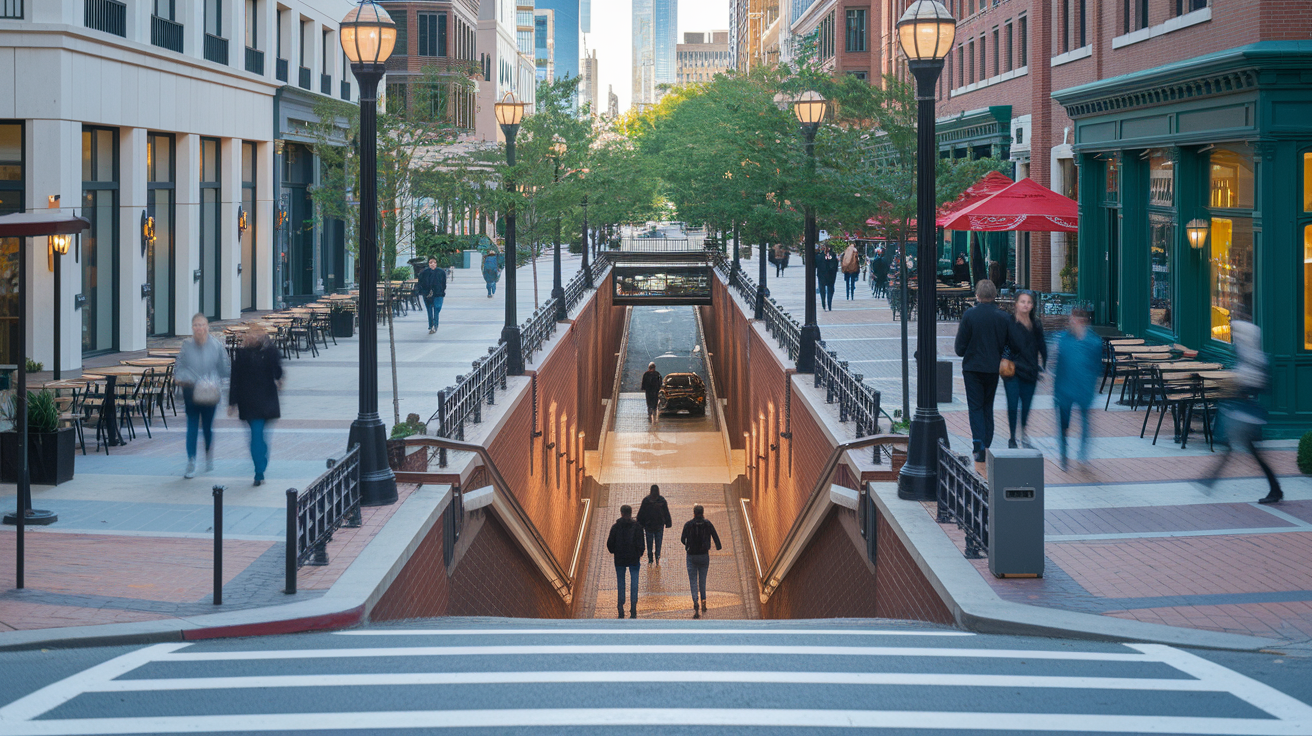
A hotel’s distance to transit is only part of the story. The surrounding neighborhood determines whether that distance feels safe, pleasant, and actually usable. A 10 minute walk through a well-lit, mixed use district with shops, cafes, and steady foot traffic is often better than a 5 minute walk down a dark, empty street with no sidewalks. The quality of the route and the activity level of the area shape how accessible the transit really is.
Mixed use central corridors typically offer the best predictability. These neighborhoods combine residential, commercial, and entertainment uses, so streets stay active from early morning through late evening. Hotels in these zones benefit from visible security, good lighting, and reliable transit frequency. Being within a 10 minute walk of two different lines or stations also adds flexibility. If one line is delayed or under maintenance, you have a backup route.
Here are five neighborhood indicators that signal strong transit connectivity and usability:
- Multiple nearby stations or lines: Being within 10 minutes of two or more stations increases reliability and route options, especially during service disruptions.
- High foot traffic and visible businesses: Neighborhoods with cafes, shops, and restaurants open late provide natural safety, lighting, and orientation cues for first time visitors.
- Well maintained sidewalks and crosswalks: Continuous, even sidewalks with marked pedestrian crossings make walks faster and safer, especially with luggage or at night.
- Proximity to major transit hubs or interchanges: Staying near a hub that connects multiple lines or modes (metro plus bus plus rail) shortens travel time to most destinations and increases service frequency.
- Safety features and lighting: Look for street lighting, CCTV coverage, visible security personnel, and recent traveler reviews mentioning safe walks to the station.
Cost Trade Offs When Applying the Hotel to Transit Distance Rule

Hotels within 5 minutes of major transit stations often cost 10 to 40% more than those 10 to 20 minutes farther out, and during big events or conferences local rates can quadruple. If you’re on a tight budget, staying slightly farther from the station can free up funds for meals, attractions, or better room quality. The question is whether the time and hassle of a longer walk, or the cost of occasional taxis or ride-hail trips, offsets the savings.
In cities with cheap and reliable ride-hail or taxi services, accepting a 15 to 20 minute walk to transit can make sense if the hotel price drops a lot. Calculate the round trip cost of a few ride-hail trips against the nightly savings. If you’re only taking transit twice a day and the hotel is $30 cheaper per night, a $10 rideshare to cover late night returns or heavy luggage days might still save you money overall.
Here are four scenarios where a longer walking distance to transit is acceptable:
- Hotel price is significantly lower and ride-hail is affordable: If nightly savings beat the cost of 1 to 2 short rides per day, the trade makes financial sense.
- You’re staying on a frequent, direct trunk line: A 15 minute walk to a metro line with 5 minute headways and no transfers can still be faster than a 5 minute walk to a slow, infrequent bus.
- You prioritize quiet or residential neighborhoods: Some travelers prefer peaceful areas over central convenience and accept longer walks in exchange for lower noise and better sleep.
- Event driven price spikes make central hotels unaffordable: During conventions, festivals, or peak tourist season, staying farther out on a reliable transit line becomes the practical default.
Tools and Verification Steps to Confirm Hotel Distance to Transit

Standard hotel booking sites don’t prioritize transit proximity well. They highlight car access, vague “near downtown” labels, or random attractions, but rarely show exact walking times to frequent transit stops. You need to verify proximity yourself using mapping tools, transit apps, and street level views before you book.
Google Maps is the starting point. Search the hotel address, switch to the “Transit” layer to see nearby stops and lines, then use “Walking” mode to measure the route to the nearest station entrance. Check the estimated time and inspect the path using Street View to confirm sidewalk quality, lighting, stairs, and crosswalks. If the route looks safe, flat, and well-lit, and the time is under 10 minutes, you’ve confirmed basic transit access.
Five Step Verification Checklist
- Map the hotel and switch to Transit view: Open Google Maps, search the hotel, and turn on the Transit layer to see nearby stops, stations, and lines.
- Measure walking distance and time: Use “Directions” in Walking mode from the hotel entrance to the nearest frequent station entrance (not just the station pin).
- Inspect the route with Street View: Click along the walking route to check for sidewalks, lighting, steps, elevator access, and overall safety.
- Verify service frequency and hours: Open the city’s transit app (Citymapper, Moovit, Transit, or the local agency app) and confirm headways, first/last service times, and night/weekend schedules.
- Run a sample trip to your main destinations: Use the transit app to estimate door to destination travel time from the hotel during the hours you’ll actually travel. Confirm transfers and total trip time.
Use Walk Score to get a neighborhood walkability rating and transit score, which can flag areas with poor connectivity even if a single station is nearby. Apps like Citymapper and Transit show real time departures, service alerts, and platform level details that help you understand whether proximity translates into reliable, frequent access. If a hotel is 8 minutes from a station but trains only run every 30 minutes, that’s less valuable than a 12 minute walk to a station with 5 minute headways. For more detailed guidance on evaluating transit access through non-standard hotel searches, see “How do I find a hotel near good transit?”, which explains the difficulty of using typical booking filters for transit proximity.
A Practical Decision Framework for Applying the Rule of Thumb During Booking

Turn the rule of thumb into a measurable decision system by putting transit access first, then layering in frequency, safety, cost, and situational modifiers. Start by confirming the hotel is within the acceptable walking range for the transit type you’ll rely on. Then verify that service frequency and hours match your travel pattern. Staying 5 minutes from a station that stops running at 10 pm doesn’t help if you’re out late. Next, check the walking route for safety, lighting, and accessibility, especially if you’re traveling with luggage or arriving at night.
Transfer penalties matter more than you expect. Each required transfer typically adds 8 to 20 minutes of real travel time and introduces reliability risk. Go for hotels that put you within a single seat ride (no transfers) to your main destinations, or at most one easy, timed connection. Target a total travel time of under 30 minutes to the city’s major attractions or business district. If you’re within that range and on a frequent line, proximity to the station itself becomes less critical.
Here’s the six step booking logic to use:
- Confirm walking distance meets the rule: 5 to 10 minutes to metro, 2 to 5 minutes to frequent bus, 10 to 20 minutes to commuter rail if schedules align.
- Verify service frequency and operating hours: Go for stops with headways under 10 to 15 minutes during your travel window. Confirm first/last service times.
- Check for single seat or easy transfer access to main destinations: Each transfer adds 8 to 20 minutes. Go for direct routes or hubs with timed, cross platform connections.
- Inspect walking route for safety and accessibility: Use Street View to confirm sidewalks, lighting, and station entrance type (stairs vs elevator).
- Apply situational modifiers: Cut acceptable distance if traveling with luggage, at night, in bad weather, or with mobility needs.
- Calculate cost trade offs: If proximity adds more than 10 to 20% to room cost, decide whether time saved or ride-hail backup costs justify the premium.
Quick Distance Conversions
| Minutes | Meters | Miles | Notes |
|---|---|---|---|
| 5 min | around 400 m | around 0.25 mi | Ideal for metro/subway; tight target for luggage or night travel |
| 10 min | around 800 m | around 0.5 mi | Standard metro range; acceptable for frequent lines in good conditions |
| 15 min | around 1,200 m | around 0.75 mi | Outer limit for metro; acceptable for commuter rail if schedules match |
| 20 min | around 1,600 m | around 1 mi | Commuter rail only; plan taxi/rideshare backup for nights or luggage |
Final Words
In practice, the post gives one clear answer: aim for a 5–10 minute walk (≈400 m) to frequent metro, 2–5 minutes for buses, and accept 10–15 minutes in lower-density areas. It walks through safety, weather, and luggage modifiers and shows how to verify times with Google Maps walking mode.
Use the decision framework and checks when you book. Treat the rule of thumb for choosing hotel location near public transit as your default, tweak for price and safety, do the map test, pick the option that keeps travel under 30 minutes to sights, enjoy a smoother trip.
FAQ
Q: What is the 15/5 rule hotel?
A: The 15/5 rule hotel is a booking shortcut: choose hotels about 15 minutes from major sights and about 5 minutes from frequent transit to balance cost, convenience, and shorter transfer times.
Q: What are the 5 P’s of hotel management?
A: The 5 P’s of hotel management are Product, Price, Place, Promotion, and People, covering what you offer, how you price it, where you operate, how you market, and guest-facing service.
Q: Why is there no room number 420 in hotels?
A: There is no room number 420 in many hotels because 420 is linked to cannabis culture; hotels skip it to avoid jokes, complaints, damage, or guests expecting cannabis-friendly accommodations.
Q: Which factor is important when selecting a hotel location?
A: An important factor when selecting a hotel location is transit access and safety: aim for a hotel within a 5-10 minute walk to frequent metro or 2-5 minutes to buses, on well-lit, walkable streets.