

What if one checklist could stop last-minute panics, missed meetings, and airport runs for replacements?
You already juggle meetings, client calls, and deadlines; packing shouldn’t add more stress.
This pre-trip checklist gives busy professionals a simple, repeatable routine that saves time, prevents costly mistakes, and gets you work-ready the moment you land.
Use it as a one-page process: gather your docs, secure your tech, pack smart, and build a quick morning-of routine.
Pre-Trip Checklist for Busy Professionals: Essential Travel Prep Made Simple
Why Streamlined Packing Matters for Busy Professionals

You’re balancing meetings, client calls, and project deadlines. The last thing you need is scrambling around your apartment the night before your flight.
Business travel needs efficiency at every step. Your packing routine should save time, not eat it.
A good system does three things: cuts down decision fatigue, stops you from forgetting expensive items, and keeps you ready to perform the second you land. Nobody wants to realize they left their laptop charger at home right before a presentation.
Poor packing costs more than inconvenience. There’s the stress when you’re digging through your suitcase for a clean shirt, or the hour you waste buying replacement toiletries at airport markup because you forgot the basics. When you’re already time-strapped, you need something that works every single trip.
Think of packing like any other business process. Build it once, tweak it as needed, then execute without overthinking. Pack with intent, travel with confidence, arrive ready to work.
Essential Checklist Categories
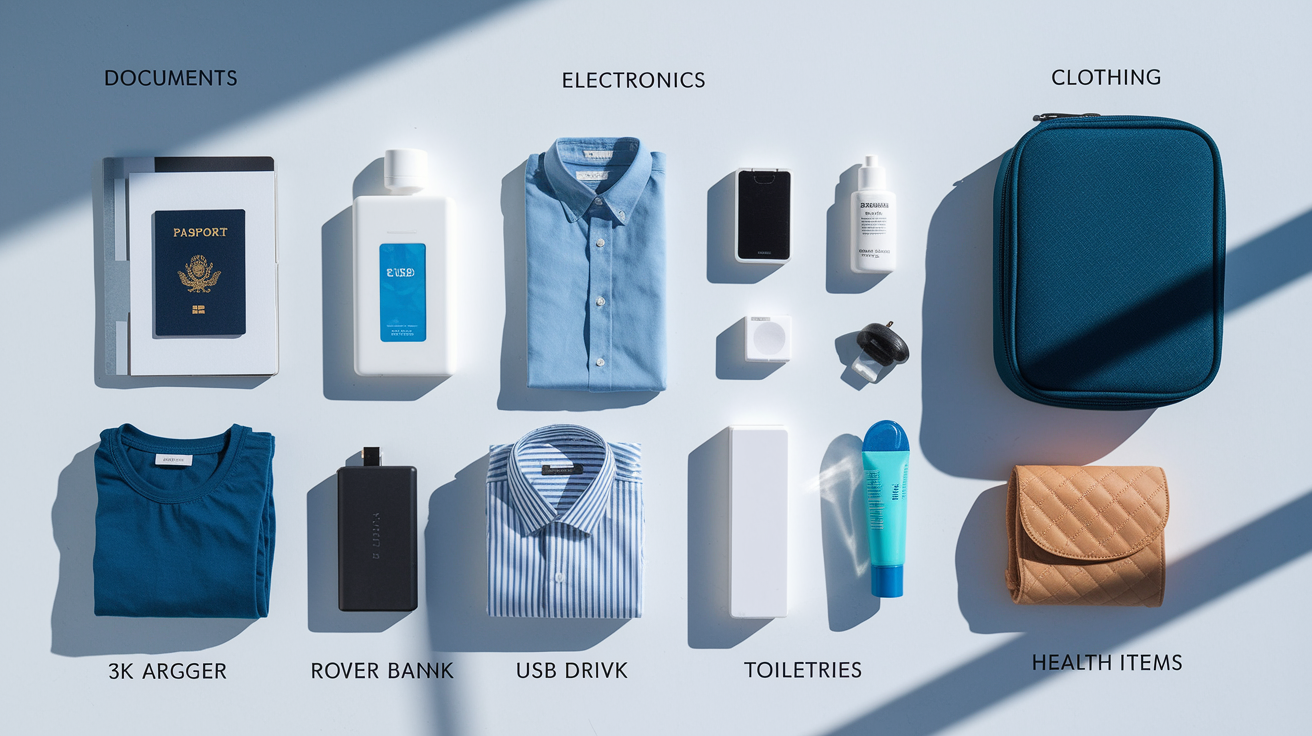
Documents & Logistics
Start with what stops your trip cold if you forget it. No passport? No hotel confirmation? You’re not going anywhere.
Keep digital and printed copies of everything critical. Cloud storage fails when there’s no signal. Your phone dies at the worst moment. Paper is boring and works every time.
What you absolutely need:
- Passport (make sure it’s valid at least six months out if you’re going international)
- Visa if required
- Flight tickets and your full itinerary, both printed and saved offline
- Hotel confirmation with the address, phone number, and reservation code
- Car rental details if you’re renting
- Travel insurance policy and emergency claims number
- At least two credit cards from different networks
- Small amount of local currency or cash
- Emergency contacts: family, colleagues, your company’s travel coordinator
- Loyalty program info and membership numbers
- Business cards, more than you think you’ll distribute
Store everything in one dedicated wallet or organizer. Don’t scatter documents across your backpack, suitcase, and jacket pockets.
Before you leave, scan or photograph every document and upload to a password-protected cloud folder. If your wallet vanishes, you can still prove who you are. Share your itinerary with someone you trust. If plans shift or something goes wrong, at least one person knows where you’re supposed to be.
Electronics & Accessories
Your work goes with you, so your tech setup can’t fail. Dead devices and missing cables wreck productivity faster than a delayed flight.
Core electronics:
- Laptop and charger
- Phone and charger
- Power bank, fully charged
- Universal travel adapter (one that works everywhere beats carrying five country-specific plugs)
- Noise-cancelling headphones for flights and loud hotel lobbies
- USB drive or external hard drive with file backups
- Wireless mouse if you hate trackpads
Pack one spare phone cable. They fail at terrible times, usually the night before your biggest meeting.
Charge everything to full the night before. Don’t count on finding an outlet at your gate or enough plugs in your hotel room.
Back up critical files to both the cloud and a physical drive. Cloud access needs Wi-Fi. A thumb drive works anywhere.
If you’re presenting, bring your deck on two devices and email yourself a copy. Redundancy beats panic when your laptop won’t talk to the projector.
Clothing & Professional Attire
Pack for the meeting, not the city. Business travel isn’t about looking trendy. It’s about looking sharp and feeling comfortable.
Wardrobe basics:
- One to two suits or blazers, depending on trip length
- Dress shirts or blouses, one per day plus a spare
- Ties, belts, and whatever accessories you normally wear
- Socks and underwear for the full trip, plus two extra pairs
- One casual outfit for downtime
- Three pairs of shoes max: professional, casual, athletic if you’re planning to work out
Go with wrinkle-resistant fabrics. Wool blends and performance dress shirts survive a suitcase better than pure cotton. If you’re bringing something delicate, use a garment bag or pack it flat on top.
Roll your clothes instead of folding. Rolling saves space and cuts down on creases. Compression packing cubes take it further.
Build a travel wardrobe where everything works together. One blazer should pair with both your dress pants and your casual khakis. One pair of shoes should transition from meetings to dinner without looking weird.
Lay out your full list 24 to 48 hours before you leave. Try on your travel outfit to make sure it fits and feels right. Discovering a missing button when you’re already late for the airport is entirely avoidable.
Toiletries & Grooming
Travel-sized toiletries get you through security fast and free up bag space for more important stuff. Hotels provide basics, but if you have preferences or sensitive skin, bring your own.
Toiletry checklist:
- Toothbrush and toothpaste
- Deodorant
- Travel shampoo, conditioner, body wash
- Face wash and moisturizer
- Daily skincare and cosmetics
- Hairbrush or comb
- Razor or trimmer
- Styling products in TSA sizes
- Stain remover pen
- Lint roller
- Wrinkle-release spray
Keep liquids at 3.4 ounces or smaller, packed in one quart-size clear bag. That’s the TSA rule for carry-on. Checking a bag gives you more flexibility, but carry-on trips demand strict compliance.
Pre-pack a toiletry kit that stays in your suitcase. Refill after every trip. When it’s time to travel, grab it and go. No hunting for your toothbrush at 10 p.m.
For longer trips or big events, throw in a small sewing kit and safety pins. Buttons pop off. Seams split. Fixing it in two minutes beats finding a tailor in an unfamiliar city.
Health, Safety & Wellness
Business trips drain you. Long flights, time zone shifts, disrupted routines, back-to-back meetings. Packing a few health basics keeps you functional when your schedule doesn’t.
Health and safety items:
- Prescription meds in original bottles, plus a prescription copy
- Vitamins or supplements you take regularly
- Small first-aid kit: bandages, pain relievers, antihistamines, cold tablets, antiseptic wipes
- Hand sanitizer (travel size for carry-on)
- Face masks if needed
- Compression socks for flights over three hours
- Eye mask and earplugs or melatonin if sleep’s tough in new places
Pack extra doses of prescriptions. If your return flight gets delayed or rerouted, you don’t want to run out. Bring at least two extra days’ supply.
Compression socks reduce swelling and help circulation on long flights. They’re not stylish, but they work. If you’ve ever shown up to a meeting with swollen ankles and tight shoes, you know why this matters.
Sleep aids are personal. If melatonin or an eye mask helps you adjust faster, bring them. Quality rest isn’t optional when you’re expected to perform.
Keep your first-aid kit somewhere easy to reach. Band-aids and pain relievers solve small problems before they turn into distractions.
Business Extras
The difference between “prepared professional” and “scrambling amateur” often comes down to a few small things you didn’t think to pack.
Business-specific essentials:
- Notebook and pen (analog backup when tech fails)
- Printed copies of presentations, agendas, or key documents
- Business docs: contracts, proposals, reference sheets
- Portable, high-protein snacks like nuts or protein bars
- Reusable water bottle (empty through security, refill after)
- Small repair kit: safety pins, spare buttons, needle and thread
Bring more business cards than you think you’ll need. Running out halfway through a conference is embarrassing and totally preventable. Simple rule: estimate how many you’ll hand out, then pack 50% more.
If you’re presenting, print a backup of your slides or talking points. Projectors fail. Laptops freeze. Paper doesn’t.
Snacks save you when meetings run late and lunch disappears, or when the only nearby food is overpriced and underwhelming. High-protein, shelf-stable options keep your energy steady.
A refillable water bottle cuts costs and keeps you hydrated. Dehydration from flights and dry hotel air makes you feel worse and think slower. Fill it after security and keep refilling throughout your trip.
Packing Strategies and Space-Saving Tips
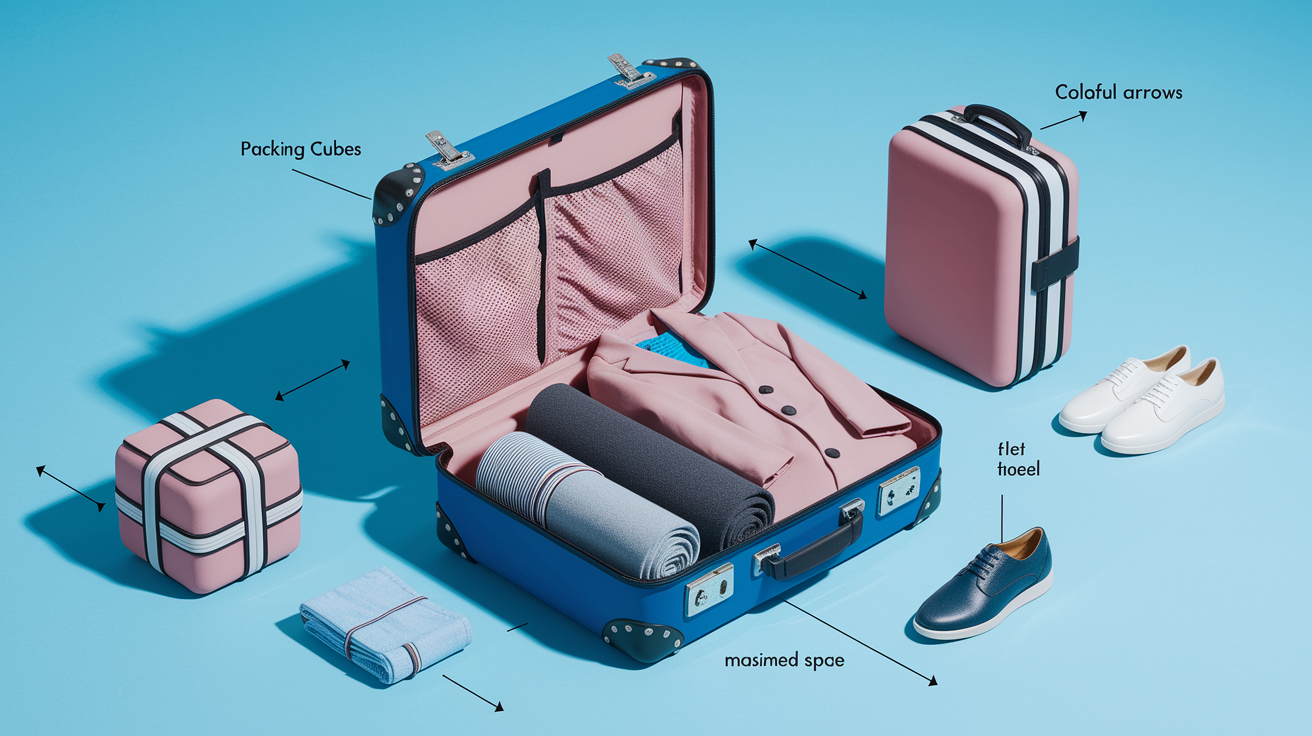
Efficient packing isn’t about cramming more in. It’s about carrying only what you’ll use and organizing so you can find things without unpacking everything.
Use packing cubes to group by category: one for shirts, one for pants, one for underwear and socks, one for toiletries, one for cables. Cubes compress clothing, maximize space, and let you pull out exactly what you need without creating chaos.
Roll your clothes instead of folding. Rolling cuts wrinkles and uses space better than stacking folded items. For dress shirts, try the ranger roll: lay flat, fold sleeves in, roll from bottom up. Sounds fussy, but it works.
Pack multi-purpose items. One blazer for meetings and dinners. One pair of dark jeans that transitions from casual to business-casual with a shirt swap. Versatility reduces what you need.
Limit shoes. They’re bulky and heavy. Three pairs max for most business trips: professional for meetings, casual for evenings, athletic if you’re working out. Wear your bulkiest pair on the plane to save suitcase space.
Plan outfits by day or by meeting. Lay them out before you pack. If you can’t picture yourself wearing it, don’t bring it. “Just in case” items bloat your bag and waste mental energy.
Go digital where possible. Scan documents instead of printing stacks. Use your phone for boarding passes, hotel confirmations, maps. Digital takes zero physical space and can’t be left in a taxi.
Pack your suitcase, then remove 20% of what you put in. Most people overpack. If you’re debating whether you need something, you probably don’t.
Carry-On vs Checked Luggage Decision Guide

Choosing between carry-on and checked depends on trip length, meeting formality, and your tolerance for baggage claim waits.
Carry-on works best for three to five day trips where you don’t need bulky formal attire. You skip baggage claim, reduce lost luggage risk, and keep essentials within reach. If your flight’s delayed or rerouted, your stuff stays with you.
Checked bags make sense for longer trips, formal suits, multiple dress shoes, or when you need liquids that don’t fit TSA rules. The tradeoff is time. You’ll wait at the carousel and face a small risk your bag won’t arrive with you.
Before checking a bag, weigh it at home. Airlines charge overweight fees starting at $50 and climbing fast. A luggage scale costs less than one penalty.
If you check a bag, never put critical items inside: laptop, phone charger, medications, passport, a change of clothes, or anything you need within 24 hours of landing. Assume your checked bag might arrive late. Pack your carry-on to survive that.
For carry-on only, verify your airline’s size and weight limits before leaving. Budget carriers enforce smaller dimensions than legacy airlines. A bag that fits one carrier might cost you a gate-check fee on another.
One reliable carry-on strategy: pack a slim laptop backpack with absolute essentials (documents, chargers, meds, one change of clothes), then use a rolling carry-on for everything else. If you’re forced to gate-check the roller, your backpack keeps you functional.
Last-Minute / 24–48 Hour Pre-Trip Checklist

The final 24 to 48 hours is when prep either saves you or stress piles up. A short, focused checklist keeps you on track.
48 hours before:
- Confirm all reservations: flights, hotel, car, airport transport
- Check flight status and sign up for delay alerts
- Verify passport expiration (needs at least six months validity for most international destinations)
- Refill prescriptions if running low
- Notify bank and credit card companies of travel dates and destinations to prevent fraud holds
- Charge all electronics to 100%
- Download offline maps, boarding passes, entertainment
24 hours before:
- Pack your suitcase using the checklists above
- Lay out your travel outfit (comfortable layers and your bulkiest shoes)
- Withdraw cash if you need local currency or small bills
- Clean out your fridge and toss perishables
- Do laundry so you leave with clean clothes and return to a manageable mess
- Stop newspaper delivery and hold mail if you’re gone more than three days
- Arrange pet care and confirm pickup
Day of travel:
- Close windows and blinds
- Adjust thermostat (set it about 10 degrees below average outside temp)
- Take out trash and recycling
- Unplug appliances, especially anything with a heating element
- No open food or dirty dishes left out
- Water plants if needed
- Feed pets or deliver them to their sitter
Minutes before you leave:
- Turn off all lights
- Check stove and oven (do one final visual check so you’re not obsessing mid-flight)
- Lock all doors and windows
- Close garage door
- Arm security system if you have one
- Final essentials check: phone, keys, wallet, phone charger, meds, glasses, passport or ID
Share your full itinerary with a trusted contact. If something goes wrong, someone should know where you are and how to reach you.
Run through this checklist every trip. Print it, save it to your phone, keep it in a travel notebook. Checklists eliminate the mental load and reduce the “did I turn off the stove?” anxiety that hits mid-flight.
Mobile, Print, and App Tools for Recurring Users

A digital or printable template speeds packing and cuts mistakes. Build it once, reuse forever.
Checklist apps and tools worth trying:
- Google Keep or Apple Notes: free, simple, synced across devices; create a “Business Travel Packing” note with checkboxes and duplicate for each trip
- Evernote: more structure than basic note apps; export checklists to PDF for printing
- PackPoint: generates custom lists based on destination, trip length, activities; useful for building a baseline
- AnyList or other dedicated checklist apps: designed for recurring tasks; set up master templates and check items off as you pack
For a printable option, create a one-page checklist in Google Docs or Word with checkboxes. Save as PDF and print a fresh copy before each trip. Keep printed lists in your suitcase.
Break your template into two: “Carry-On Survival Kit” and “Full Packing List.” The survival kit covers only what you must have on your person (passport, phone, charger, meds, one change of clothes). The full list includes everything else. This helps you prioritize when you’re short on time or space.
Use a password manager like LastPass, 1Password, or Bitwarden to store digital copies of your passport, license, travel insurance, and loyalty numbers. If your physical docs are lost or stolen, you can access backups from any device.
TripIt consolidates flight, hotel, and car rental confirmations into one itinerary. Forward confirmation emails to the app and it builds a day-by-day schedule you can access offline.
Download offline maps in Google Maps or Maps.me before you travel. Cell service and Wi-Fi aren’t guaranteed, especially in airports, rental cars, and unfamiliar neighborhoods.
For entertainment, preload audiobooks (Audible), podcasts (Spotify, Apple Podcasts, Pocket Casts), or movies (Netflix, Amazon Prime) to your devices. Streaming needs bandwidth you might not have. Offline downloads work everywhere.
Build a “travel tech” folder on your phone’s home screen with quick access to your airline app, hotel app, TripIt, offline maps, and password manager. Group everything in one place so you’re not hunting when you’re in a hurry.
Final Reminder to Prioritize and Pack with Intent
Every item in your suitcase should justify being there. If you can’t name when or why you’ll use something, leave it home.
Packing with intent means asking three questions before an item goes in: Will I actually use this? Can I buy it at my destination if I need it? Does it solve a problem or just take up space?
Start with the non-negotiables: documents, chargers, medications, one professional outfit. Everything else is secondary. If you run out of time or space, you can survive without the extras. You can’t work without your laptop charger.
You’ll forget something eventually. It happens to everyone. The goal isn’t perfection, it’s reducing how often and how badly you mess up. A solid checklist and a repeatable system cut forgotten items by 80% or more.
Review and refine after every trip. If you packed something you never used, cross it off. If you wished you’d brought an item, add it for next time. Your system should improve with experience.
Business travel is a skill. Packing is the foundation. Get it right and everything else gets easier. You’ll spend less time worrying about what you forgot and more time focused on why you’re traveling in the first place.
Final Words
You’re packing the last charger and scanning reservations—this guide gave a tight pre-trip checklist for busy professionals: quick booking rules, must-have documents, tech and connectivity tips, packing choices, payment backups, and a day-of timing plan.
Treat the checklist like a short routine. Do the night-before walk-through, set alarms, and stash one backup card in a separate place.
Keep this pre-trip checklist for busy professionals handy, and you’ll cut stress, save time, and actually enjoy the trip. You’ve got this.
FAQ
I can’t generate the FAQ yet — the outline asked for an approved hyperlink list. Please provide the allowed links (up to 2 internal and 2 external). If there are none, reply “none” and I’ll proceed.