

Booking the cheapest place is the fastest way to ruin a trip.
Sounds harsh, but it’s true more often than you think.
If you’ve ever spent a night beside a noisy bar or been hit with surprise cleaning fees, you know why.
This post gives a straight, printable accommodation checklist you can use every time you compare hotels, Airbnbs, or rentals.
Use it to cut through marketing fluff, verify safety and WiFi, and decide what’s essential for your trip—family, solo, or work.
By the end you’ll have a clear rule set for choosing stays that actually work.
Quick Accommodation Selection Checklist (Printable)
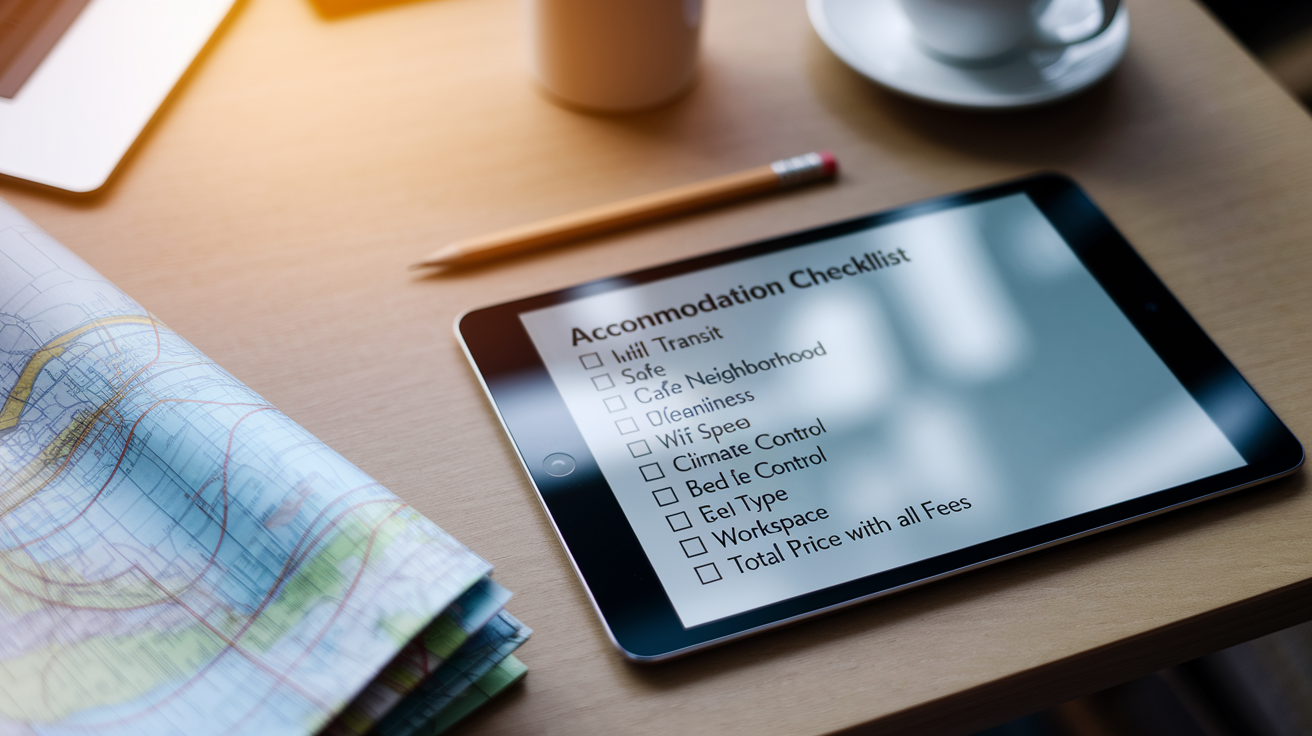
Use this checklist every time you’re choosing a hotel, Airbnb, or rental. It covers what actually matters, the stuff that keeps you from dealing with surprise fees or a nightmare location after you’ve already paid.
Complete Accommodation Selection Checklist:
- Location puts you within 15 minutes walking distance of transit, what you’re there to see, or where you need to be
- Neighborhood gets mentioned positively in recent reviews, especially around safety, lighting, and whether you can walk around easily
- Property shows real cleanliness with dated photos and recent guest comments about housekeeping
- WiFi speed hits 25+ Mbps (ask the host or check recent reviews where people mention streaming or video calls)
- Room has climate control that works for when you’re visiting (AC or heat)
- Bed type and count actually match your group and how you sleep
- There’s a workspace or table visible in photos if you need somewhere to work or spread out
- Total price shows all fees, taxes, cleaning charges, and deposit details before you hit book
- Cancellation policy explains refund terms and deadlines without burying them in fine print
- Accessibility features (elevator, ground floor, grab bars) are confirmed if you need them
- Noise level gets assessed by checking what people say about street sounds, neighbor noise, or thin walls
- Photos across Google, Booking.com, Airbnb, and TripAdvisor show the same room setup and condition
- At least 10 reviews from the past six months talk about the specific things you care about
- Refund and rebooking rules are documented and saved before you pay anything
Go through each one when you’re comparing two or three places. If a listing can’t clearly answer a question, move on. Save this in your phone’s notes and pull it up before booking.
Understanding Essential vs. Optional Accommodation Features
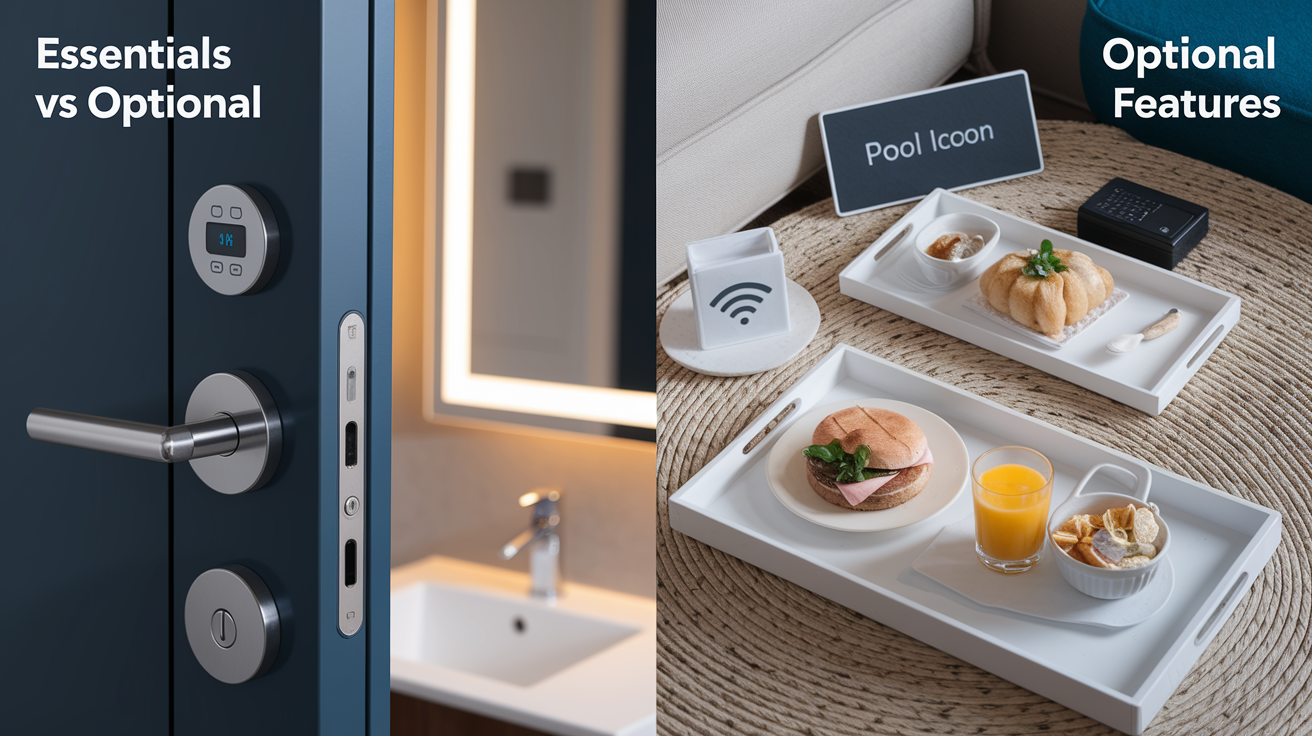
Every place offers a mix of stuff. Some things prevent actual problems. Others just make things nicer. Knowing which is which helps you spend money on what improves your trip instead of what sounds good in a listing.
Essentials are features you can’t really work around. Without them, your stay gets harder or less safe. Optional features add comfort, but you can manage without them or find them nearby.
Essentials (Non-Negotiable):
- Reliable door locks and secure building entry
- Climate control (AC, heating, or both depending on season)
- Hot water and working bathroom fixtures
- Stable WiFi for staying in touch and navigating
- Clean bedding and towels that get changed between guests
- Clear emergency exits and working smoke detectors
Optional Features (Nice-to-Have):
- On-site gym or pool
- Daily housekeeping or turndown service
- Complimentary breakfast or in-room coffee
- Rooftop terrace, lounge, or co-working space
- Concierge or 24-hour front desk
If you’re traveling for work, fast WiFi and a workspace stop being optional. Families often need a kitchen, or at least a microwave and mini-fridge, which makes those essential for that kind of trip. Leisure travelers staying near restaurants can skip the kitchen entirely. Focus on what you’ll use every single day, not what sounds appealing when you’re browsing.
How to Evaluate Accommodation Safety and Neighborhood Quality

Safety shapes everything about your stay. A beautiful room in a sketchy area still means stress every time you leave the building or come back late. Check the neighborhood before you obsess over the property.
5 Steps to Verify Neighborhood Safety:
- Open Google Maps, search the property address, switch to Street View, and scan the block during different times of day (use the time slider if it’s available).
- Read the 10 most recent reviews and search for words like “safe,” “noise,” “walk,” and “night” to spot patterns.
- Check a local crime map or city safety dashboard for the neighborhood. Many cities publish free tools showing where incidents cluster.
- Confirm how far you are from the nearest transit stop, grocery, and late-night food. If the walk means crossing poorly lit areas or highways, reconsider.
- Look for mentions of building security, keycard entry, lobby staff, or exterior lighting in the listing and guest reviews.
Red flags include vague reassurances like “felt safe enough,” mentions of broken exterior doors, reports of people hanging around entrances, or multiple guests saying they wouldn’t walk alone at night. One isolated comment might be an outlier. Three or more recent mentions mean it’s a real issue.
Accommodation Selection Tips for Different Types of Travelers
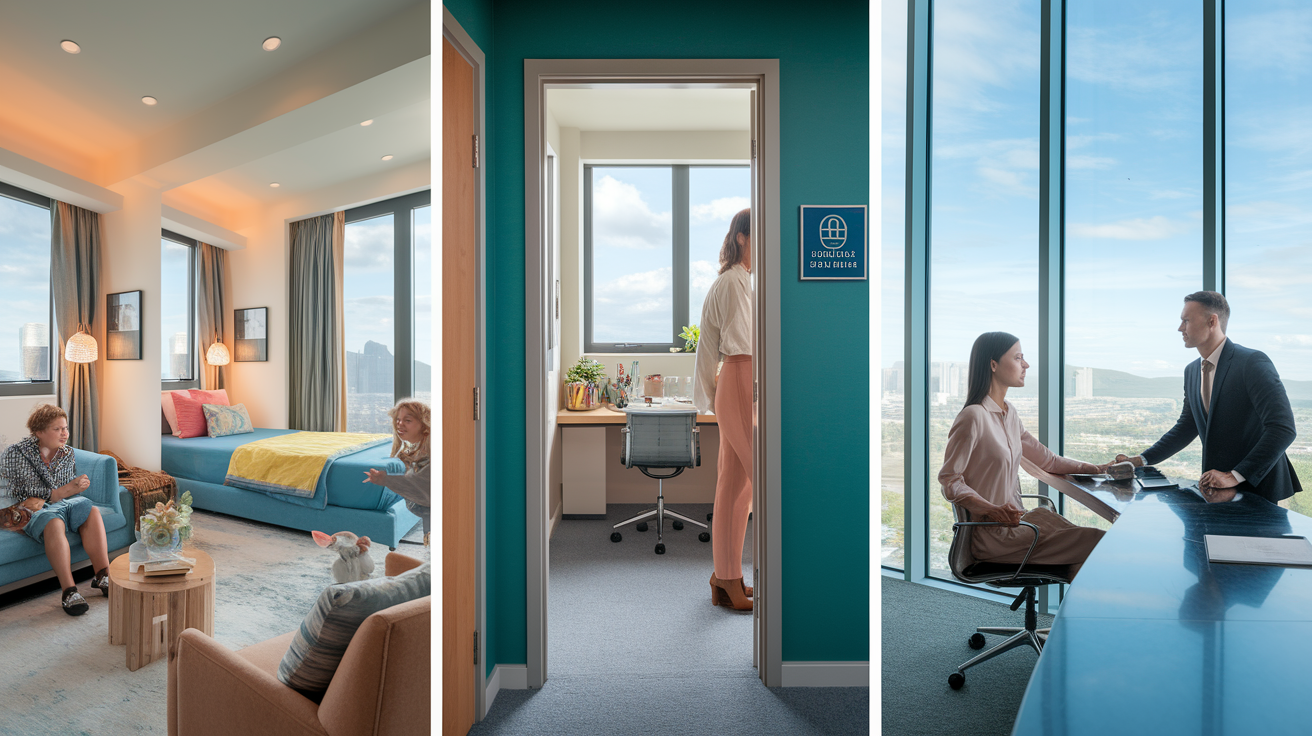
Same checklist applies to everyone, but how much weight you give each item changes based on your trip and who’s coming with you.
Family Travelers
Families need space, safety, and flexibility. Look for properties with at least one separate bedroom per two adults or per parent with kids. Confirm bed count and type before booking. Pullout sofas and air mattresses don’t count as real beds for multi-night stays.
Make a kitchen or at least a microwave and mini-fridge a priority. Eating every meal out with kids gets expensive fast and wears everyone down. Check reviews for mentions of child-friendly stuff like high chairs, cribs, or stroller storage. Ask about outlet covers, window locks, and balcony safety if you’re traveling with toddlers.
Noise tolerance goes both ways. Families with young kids should look for ground-floor units or properties that explicitly welcome children. Check if walls are thin by searching reviews for “noise” or “hear.” Being near parks, playgrounds, or pools makes downtime way easier.
Solo Travelers
Safety is your top filter. Go for properties in well-reviewed neighborhoods with recent mentions of solo travelers feeling comfortable. Look for keyless entry, 24-hour check-in, and clear instructions for late arrivals.
If you’re booking a private room in a shared space, confirm whether bathrooms are private or shared, and check if common areas get used or sit empty. Some solo travelers want the social aspect of hostels or guesthouses. Others want total privacy. Read reviews from other solo guests to see if the vibe matches what you’re after.
Flexible cancellation policies matter more when you’re traveling alone. If plans shift or a property feels off after booking, you want the option to rebook without losing money. Budget-conscious solo travelers can often find better value in private rooms at hostels or small guesthouses than in budget hotel chains.
Business Travelers
WiFi speed is your first essential. Confirm at least 25 Mbps download. Ask the host directly or search reviews mentioning video calls or streaming. Slow WiFi during a work trip isn’t just annoying. It kills productivity.
Check for a real workspace with an actual desk and chair. “Workspace available” in a listing doesn’t always mean usable. Look at the photos. Proximity to airports, transit hubs, and meeting locations should drive your location choice. Calculate total transit time, not just distance. A property two miles from the airport but requiring a transfer and 45-minute commute is worse than one six miles away with a direct 20-minute train.
Noise control matters. Look for reviews mentioning thin walls, street noise, or early-morning disruptions. Business travelers often need to take calls or start work before typical hotel quiet hours end. Reliable climate control, blackout curtains, and a comfortable bed aren’t luxuries. They’re essentials when you need to perform the next day.
How to Analyze Reviews and Photos Effectively

Reviews and photos are your best tools for confirming what a listing actually delivers. Most people skim them. Smart travelers validate them.
6 Steps to Verify Reviews and Photos:
- Filter reviews by date and read only those posted in the past six months. Older reviews might describe a property that’s since changed ownership, management, or condition.
- Search reviews for specific keywords matching your priorities: “WiFi,” “noise,” “clean,” “hot water,” “check-in,” “location.”
- Look for patterns across at least 10 reviews. One complaint about noise might be an outlier, but five mentions of street noise mean it’s real.
- Compare photos across platforms (Google, Booking.com, Airbnb, and the property’s own site). If images don’t match or guest photos show different furniture or layouts, ask the host for clarification.
- Check the ratio of text-only reviews to photo reviews. Properties with very few guest photos might be hiding condition issues.
- Verify reviewer profiles when possible. Reviewers with multiple past reviews and verified bookings are more reliable than single-review accounts.
Manipulated listings often show professional photos that look too perfect, generic positive reviews posted in clusters on the same dates, and vague descriptions that skip specifics like square footage, exact bed sizes, or appliance brands. If a property has 50 five-star reviews but none mention specific features you care about, that’s a warning sign. Authentic reviews include small complaints, specific praise, and enough detail to picture the stay. “The shower had great pressure but the bathroom fan was loud” is way more credible than “Amazing stay, highly recommend!”
Final Words
Ready to pick your next place? The checklist gave 12–14 clear items—location, neighborhood safety, cleanliness, WiFi speed, amenities, noise, pricing transparency, cancellation and refund terms, room features, accessibility, and review‑validation steps.
Use the essentials vs optional split to decide quickly for family, solo, or business trips. Follow the neighborhood safety steps and the review/photo checks before you book.
Keep the accommodation selection checklist for travelers with you—print it or save it on your phone and run through it before you hit confirm. You’ll book smarter and travel with less stress.
FAQ
Q: What should be on a quick accommodation selection checklist?
A: A quick accommodation selection checklist should include location proximity, neighborhood safety, verified cleanliness, WiFi reliability, key amenities, noise level, transparent pricing, cancellation and refund policies, room features, accessibility, and review checks.
Q: How do I prioritize essential vs optional features?
A: Prioritizing essential versus optional features means picking safety, cleanliness, climate control, and reliable WiFi first; treat gyms, pools, and breakfast as extras you add only if they match your trip purpose.
Q: What are the top essential features I should always check?
A: The top essential features to always check are safety, verified cleanliness, working climate control, stable WiFi, clear pricing, cancellation flexibility, and a suitable bed and workspace.
Q: How can I verify neighborhood safety before booking?
A: Verifying neighborhood safety means checking crime maps, recent guest reviews, transit access, street lighting via photos or maps, and walking routes at your arrival time.
Q: What red flags should I look for in guest reviews?
A: Red flags in guest reviews include repeating complaints, very old reviews only, mismatched photos, host ignoring issues, vague praise, and sudden recent negative trends.
Q: How do I analyze accommodation photos to spot misleading listings?
A: Analyzing photos to spot misleading listings means comparing pictures across sites, checking timestamps, matching photos with reviews, spotting inconsistent decor, and doing a quick reverse image search.
Q: What should families prioritize when booking accommodation?
A: Families should prioritize space, kitchen access, multi-bed setups, safety features, stroller-friendly routes, laundry, and child-friendly amenities like locks and nearby parks.
Q: What should solo travelers focus on when selecting accommodation?
A: Solo travelers should focus on safety, private room options, host responsiveness, central location, easy transit, and simple cancellation for flexibility.
Q: What should business travelers check before booking accommodation?
A: Business travelers should check WiFi speeds, a comfortable desk and chair, low-noise rooms, reliable power outlets, express transport links, and flexible check-in options.
Q: How can I confirm WiFi reliability before and after booking?
A: Confirming WiFi reliability means reading recent reviews about speed, asking the host for Mbps expectations, checking business-traveler mentions, and testing speed on arrival with a simple app.
Q: How do I use the quick accommodation checklist when booking?
A: Using the quick checklist means running through each item as a yes/no filter, prioritizing non-negotiables first, comparing the final two options, and confirming policies before you pay.