

Want to see real Tokyo, not the Instagram version?
Skip the crowded exit-and-snap routine: three simple transit moves let you ride like a local and avoid tourist traps.
Grab a rechargeable IC card, learn to read platform signs, and trade the busiest hubs for buses, the Toden tram, or quieter Metro exits.
This post gives clear rules of thumb, quick route choices, and small timing habits that save you hours and keep you out of tourist zones.
Read on to move faster and eat better.
Core Strategies for Navigating Tokyo Transit and Avoiding Tourist Trap Hotspots

Tokyo’s transit network moves more than 40 million people daily across 13 subway lines (9 Tokyo Metro, 4 Toei), a tangle of JR routes including the Yamanote loop, city buses, one vintage tram, and waterbus services. The map looks chaotic. But you only need three skills: tap an IC card at the gates, read platform signs, and know where tour groups pile up so you can go somewhere else.
Get a rechargeable IC card the second you land. Suica or Pasmo, doesn’t matter which. Both work on nearly every train, subway, bus, and tram in Tokyo, plus convenience stores and vending machines. Most visitors skip paper tickets entirely. Load the card with ¥2,000 to ¥3,000 to start, tap in when you enter a gate, tap out when you leave. The fare comes off automatically.
Build your routes around the Yamanote Line for big stations (Shinjuku, Shibuya, Tokyo Station, Akihabara) and use Metro lines when you need specific neighborhoods. Want to avoid tourist mobs and see where actual Tokyoites live? Take buses or the Toden Arakawa tram, which rolls 12 kilometers through 30 quiet residential stops that tour buses never reach.
To sidestep the worst traps and move like someone who actually lives here:
- Don’t ride trains between 7 and 9 AM or 5 and 7 PM unless you have no other option. Rush hour means station staff literally pushing passengers into packed cars.
- Use buses to reach shotengai (traditional shopping streets) where you’ll find produce vendors, fish counters, tofu shops. Zero souvenir junk.
- Ride the Toden Arakawa tram or a waterbus instead of the Yamanote when your schedule allows. You’ll see neighborhoods the tour circuit ignores completely.
- Stay away from restaurants and shops within 200 meters of major Metro exits in Shibuya, Asakusa, or Harajuku. Prices spike and quality drops the closer you get to the turnstiles.
- Look for Japanese-only menus and signs. Heavy use of Mandarin, Korean, or English usually means the place targets tour groups.
- Check Google Maps or Navitime before every trip to confirm platform numbers, transfers, and delays. This saves you from getting lost inside megastations like Shinjuku.
Practical Use of Suica and Pasmo for Stress-Free Travel in Tokyo
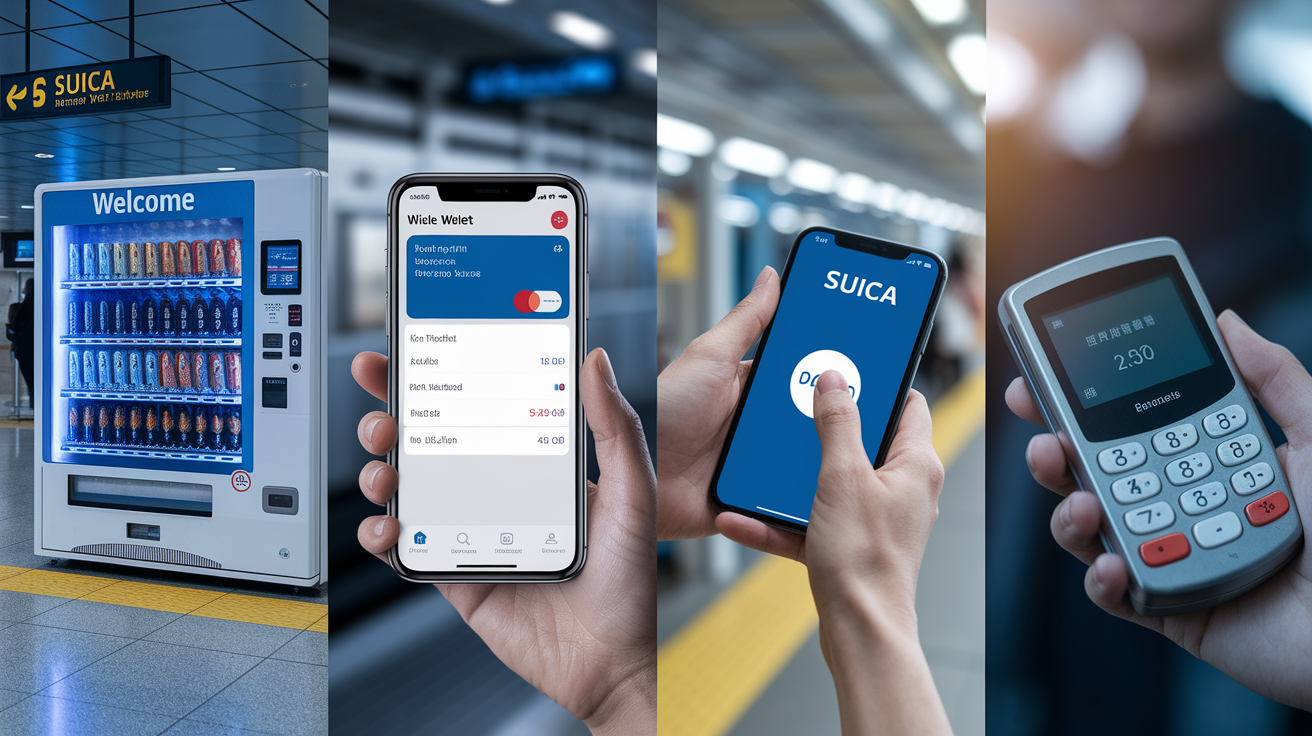
Suica and Pasmo do the same thing. Both are rechargeable IC cards that replace paper tickets and work across JR, all Metro and Toei lines, city buses, the tram, and most waterbuses. You can also tap them at Family Mart, 7-Eleven, Lawson, and thousands of vending machines. Tourist versions (Welcome Suica and Welcome Pasmo) are sold at airport kiosks and last 30 days. Standard cards never expire and you can get a refund when you leave, minus a small fee.
Buy your card at any JR office, Metro ticket machine, or airport arrivals hall. Airport machines have English menus and take cash or cards. Load at least ¥1,500 to ¥2,000 for your first couple days. Top-up machines are everywhere, but most only take cash, so carry ¥1,000 notes. If you’ve got an iPhone with Apple Wallet, you can add a digital Suica and top up using a credit card, which means no cash needed at all.
Here’s the full process from landing to first ride:
- Find a ticket machine or JR office. Narita and Haneda both have English-speaking counters near baggage claim.
- Select “Purchase new card” on the touchscreen. Choose Suica or Pasmo (the difference is just branding).
- Pay the initial amount, usually ¥1,000 or ¥2,000, which includes a ¥500 deposit you’ll get back later.
- Tap the card on the blue reader at any ticket gate going in, tap again coming out. The right fare gets deducted automatically.
- Check your balance on the small screen above the reader after you tap out, or stick the card in any ticket machine and hit “Check balance.”
When your balance drops below ¥500, top up at a ticket machine (look for “Charge” or “Top Up”), at a convenience-store register, or through the Suica app if you’re using the digital version. Always keep at least ¥500 on there so you don’t get stuck at an exit gate mid-transfer.
Route Planning and Mastering Tokyo Metro, JR Lines, and Efficient Transfers
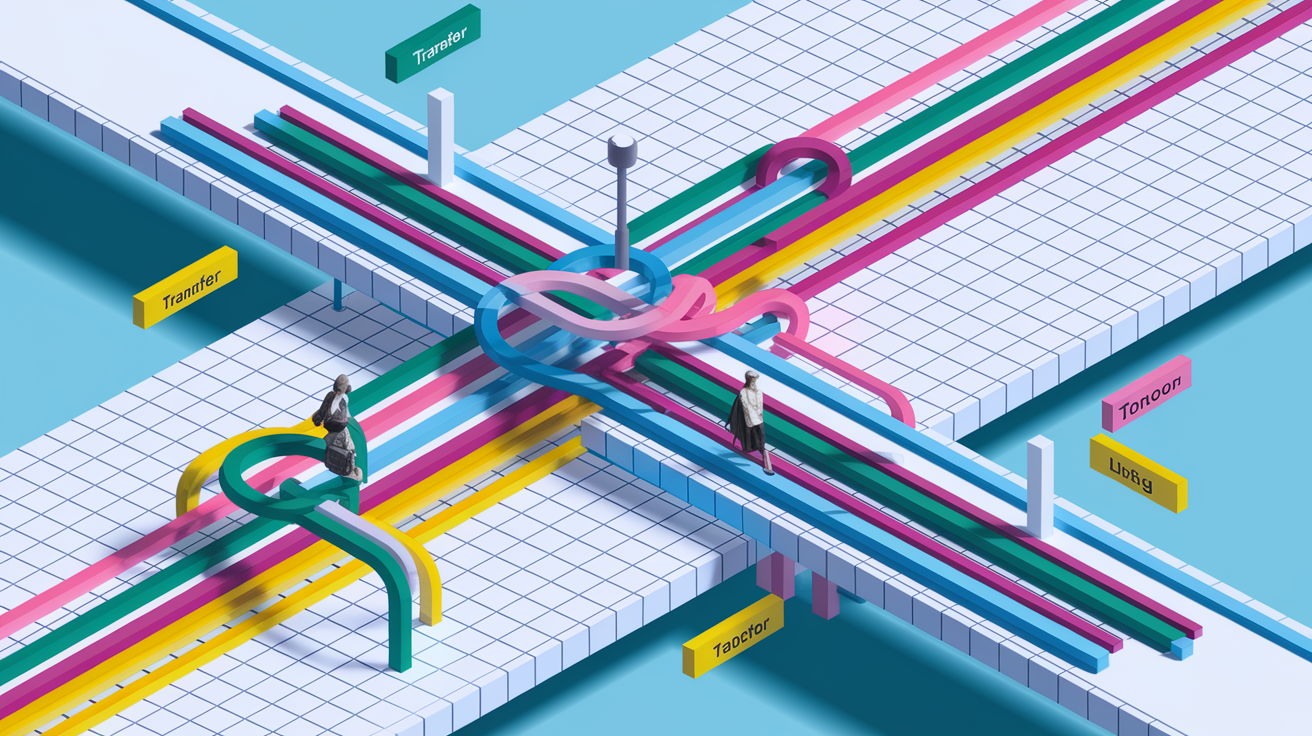
Tokyo Metro and Toei Subway run 13 color-coded lines that zigzag through the city center. JR East operates additional routes, the most useful being the Yamanote Loop, which hits Shinjuku, Shibuya, Harajuku, Tokyo Station, Ueno, and Ikebukuro in a 35-kilometer circle. Most trips combine one Metro or Toei leg with one JR leg, or need a transfer between two Metro lines at a shared station.
The IC card makes transfers simple. With Suica or Pasmo, you tap in once at your starting station and tap out once at your destination, even if you switch lines three times between. The system figures out the cheapest route and charges the right fare. If you’re using paper tickets, transferring between Tokyo Metro and Toei requires buying a separate transfer ticket mid-trip, which wastes time and adds confusion. Stick with IC.
Megastations like Shinjuku, Tokyo, and Ikebukuro have over 200 exits each and platforms spread across multiple levels. Google Maps and Navitime tell you which platform to use and which exit to take, saving you 10 minutes of wandering underground. Before you board, check platform signs for train direction (they show the final stop, not every station along the way) and make sure the line color matches your app. Transfers usually take 3 to 8 minutes of walking. Follow overhead signs in English and look for the line name and color stripe.
| Line/System | Best Use Case | Transit Notes |
|---|---|---|
| JR Yamanote Line | Connecting major hubs (Shinjuku, Shibuya, Tokyo Station, Ueno) | Circular route; trains every 3–5 minutes; JR Pass works, Tokyo Subway Ticket doesn’t |
| Tokyo Metro (9 lines) | Reaching central neighborhoods and tourist sites quickly | Color-coded; Tokyo Subway Ticket works; needs transfer ticket if using paper tickets to Toei |
| Toei Subway (4 lines) | Filling coverage gaps (Roppongi, Asakusa, Shinjuku-sanchome) | Different operator from Tokyo Metro; same IC card works; Tokyo Subway Ticket covers it |
| Toden Arakawa Tram | Low-tourist neighborhoods, nostalgic ride through residential Tokyo | Flat ¥170 adult fare; runs ~12 km with 30 stops; takes ~50 minutes end to end; Suica/Pasmo accepted |
Avoiding Tokyo’s Most Common Tourist Traps with Smart Transit Choices

A tourist trap in Tokyo isn’t usually a scam. It’s a place that once served locals but now exists for bus tours and Instagram traffic, with prices 30 to 50 percent higher than the same thing two blocks away and quality dumbed down for mass appeal. You’ll spot them by the wall of English and Mandarin signs, snack-on-a-stick vendors everywhere, and almost zero older Japanese customers outside peak hours.
Use transit to jump past these zones. The Toden Arakawa tram connects Waseda to Minowabashi through neighborhoods where produce stands, hardware shops, and ramen counters still outnumber souvenir racks. Shotengai (covered or open shopping streets) exist across every ward and stay genuine because they depend on locals walking by. Tenjinbashi-suji in Osaka is Japan’s longest shopping street, but Tokyo has dozens of smaller versions you can reach with one Metro stop and a five-minute walk. These streets have fishmongers, tofu makers, bento counters, stationery stores, old barber shops. Not novelty T-shirt racks.
Clearest signs you’ve entered a trap:
- Menus printed in four or more languages with photos of every dish.
- Staff outside waving menus or calling to you in English.
- Prices 20 percent or more above what you paid for the same thing (ramen, onigiri, sushi) in a quieter spot yesterday.
- Tour groups showing up by chartered bus between 10 AM and noon.
- Souvenir shops dominate storefronts, with almost no daily-use businesses (dry cleaners, pharmacies, grocery stores).
- Almost no one over 60 shopping or eating, almost no one speaking Japanese.
- Checkout counters piled with novelty snacks in English packaging designed for overseas gift-giving.
Three or more of these? You’re in a zone built for volume, not quality. Get on the next train or bus and hop off two or three stops away in any direction.
Authentic Local Neighborhoods to Explore Using Tokyo Transit

Locals eat, shop, and hang out in neighborhoods built around shotengai, depachika (department-store basement food halls), small parks, and side-street izakaya clusters. These areas are always near a Metro or JR station but rarely at the main tourist exits. You’ll know you’re in the right place when the signs are Japanese-only, the average customer age is over 40, and nobody’s photographing their food.
Shimokitazawa (Keio Inokashira Line or Odakyu Line) is a maze of narrow streets packed with indie coffee shops, used-clothing stores, small theaters, and standing bars where you order by pointing at the chalkboard. The station’s tiny and there’s no tour-bus parking, which keeps crowds manageable even weekends. Walk any direction from the north exit and you’ll hit izakaya with handwritten menus, record shops with listening booths, and produce stands selling seasonal vegetables by the bundle.
Koenji (JR Chuo Line) and Nakano (JR Chuo Line) give you similar density of actual life. Koenji’s shotengai runs north and south from the station with bakeries, tea sellers, and small grocers. Nakano Broadway, a four-story mall near Nakano Station, mixes anime collectibles upstairs with depachika-style food counters and daily-use shops on the ground floor. Locals buy bento and fresh fish there every afternoon. Both neighborhoods sit 10 to 15 minutes west of Shinjuku on the Chuo Line and see almost zero tour traffic.
For waterfront calm and open markets, take the Yurikamome Line to Toyosu Market (the replacement for old Tsukiji’s inner market). Tuna auctions need advance registration, but the food stalls and retail fish counters are open to walk-ins and serve working sushi chefs, not tourists. Or board a Sumida River waterbus from Asakusa to Odaiba or Toyosu. These boats run every 30 to 60 minutes, accept Suica and Pasmo on most routes, and offer skyline views without the crowds you’d face walking Rainbow Bridge.
Five neighborhoods and routes to hit for real Tokyo:
- Yanaka and Nippori (JR Yamanote or Chiyoda Line). Old temple district with traditional sweets shops, small museums, and a cemetery popular with locals for quiet walks.
- Toden Arakawa tram route from Waseda to Minowabashi. Residential streets, small shrines, zero tour infrastructure.
- Kagurazaka (Tozai Line). Hilly streets with French bistros, sake bars, and traditional ryotei (high-end Japanese restaurants). Busy at night but locals dominate.
- Jiyugaoka (Tokyu Toyoko Line). European-style shopping district with bakeries, cheese shops, and small cafés. Weekend brunch spot for Tokyo families.
- Tsukishima (Yurakucho Line or Oedo Line). Monjayaki (pan-fried batter) district where locals cook their own meals at table grills. Almost no English menus.
How to Navigate Peak Hours, Crowd Control, and Train Etiquette in Tokyo
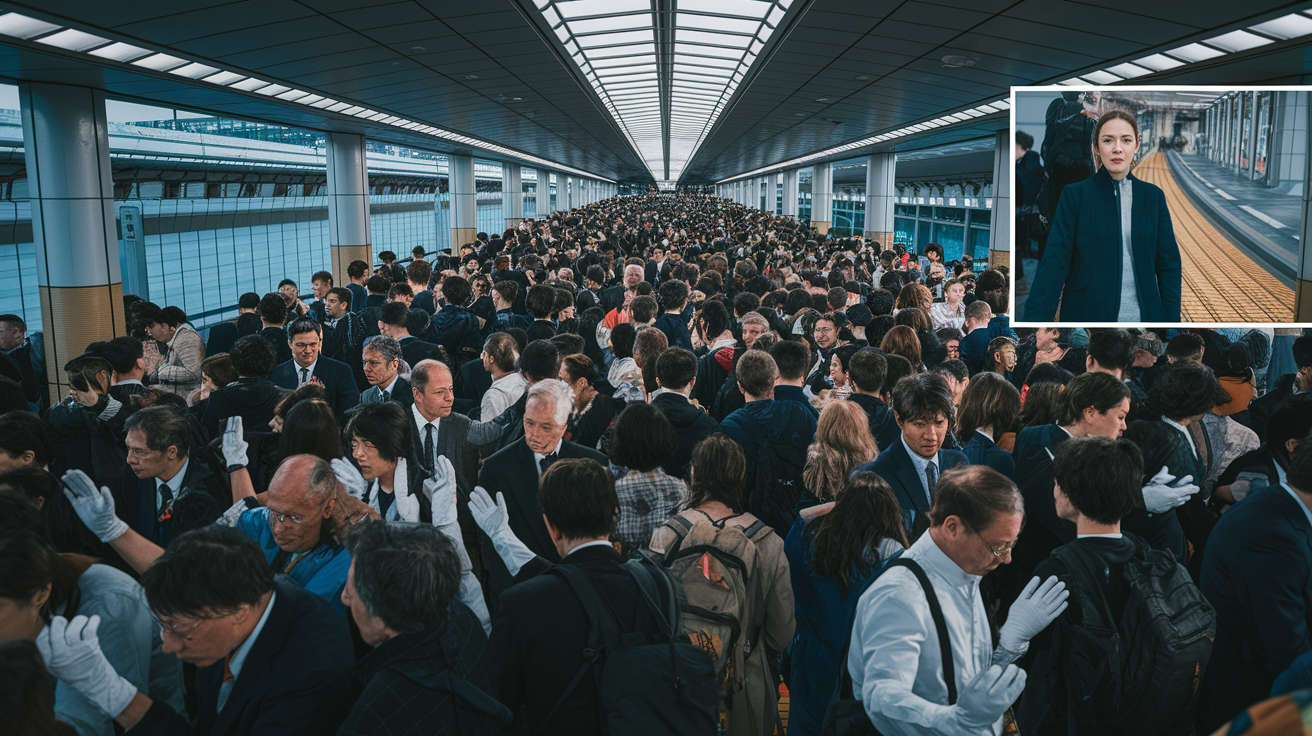
Rush hour in Tokyo runs 7:00 to 9:00 AM and 5:00 to 7:00 PM weekdays. During these windows, trains on the Yamanote, Chuo, and Tozai lines regularly hit 200 percent capacity, which means you’re pressed shoulder to shoulder with zero personal space. Station staff wearing white gloves push passengers into cars to close the doors. If you’re traveling with kids, rolling luggage, or mobility issues, skip these hours completely or budget extra time and patience.
Platforms use floor markings to show where doors open. Queue behind these markers single-file and wait for passengers to exit before you board. Once inside, take your backpack off and hold it in front of you or put it on an overhead rack. Priority seating (silver or yellow seats near doors) is for elderly passengers, pregnant women, and people with disabilities. Vacate these seats if someone who needs them boards. Keep your phone on silent and don’t make calls. If you need to check a map or message, hold your phone low and close to your body so you’re not blocking the aisle.
If you must travel during rush hour:
- Board trains at terminal or early-line stations where you can grab a seat or at least a wall to lean on before the crowd builds.
- Use Navitime or Google Maps to find alternate routes with fewer transfers, even if total time is a couple minutes longer.
- Stand near the doors if you’ve got a short ride (three stops or fewer), but move toward the center if you’re on for 10 or more stops. Keeps you out of the boarding crush.
- Show up at your platform 10 minutes early so you can position yourself in the right spot without rushing or guessing which car to board.
Smart Use of Buses, Tram, and Waterbuses to Reach Less-Crowded Areas
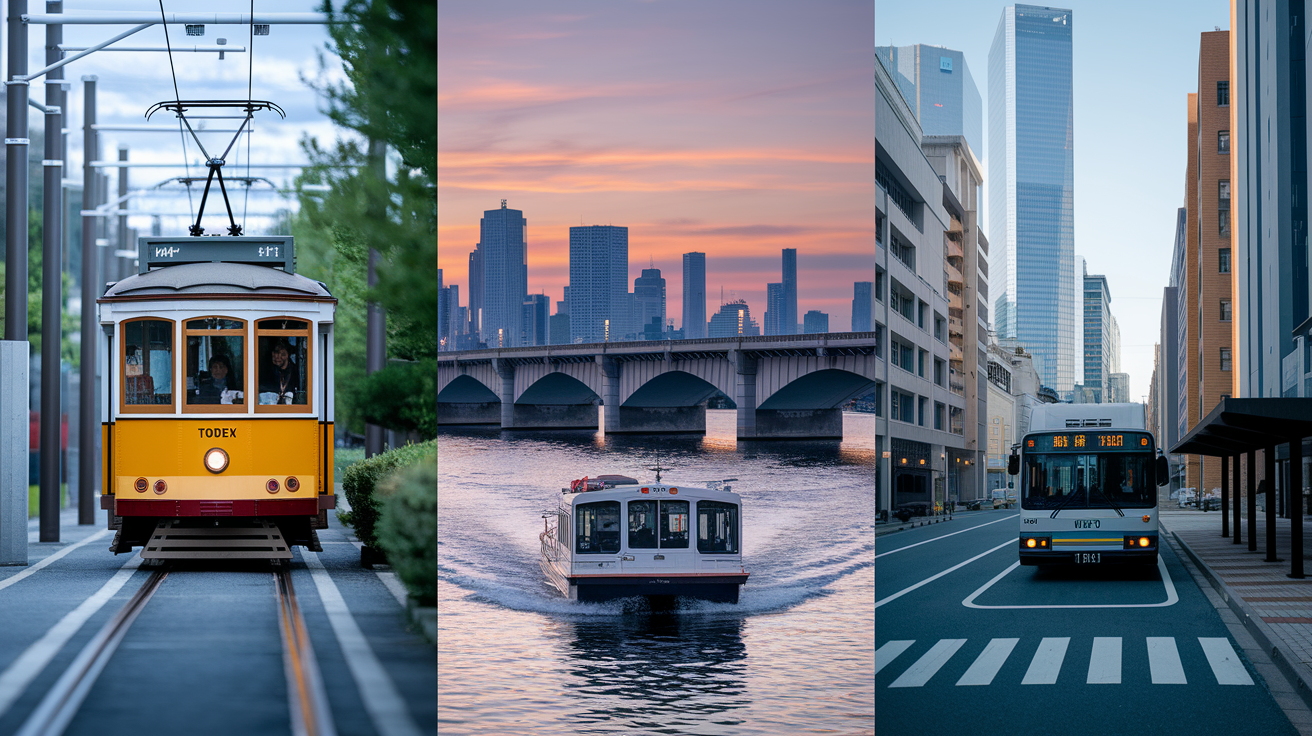
Buses in Tokyo reach residential streets, parks, and shopping districts with no nearby Metro or JR station. Most routes charge a flat ¥210 fare (adult), paid by tapping your Suica or Pasmo when you board, or dropping exact change in the fare box near the driver. Some routes use a zone system where you take a numbered ticket boarding and pay the displayed fare when you exit. Watch other passengers the first time and copy what they do. One-day bus passes (around ¥500 to ¥600) can be bought from the driver and make sense if you’re planning four or more bus rides in a single day.
The Toden Arakawa tram is the only survivor of Tokyo’s old streetcar network. It runs from Waseda (near Waseda University) to Minowabashi in about 50 minutes, stopping at 30 small stations through Shinjuku, Toshima, Kita, and Arakawa wards. The route passes rose gardens, neighborhood shrines, small shopping streets, and residential blocks where you’ll see laundry hanging from balconies and grandmothers riding bikes with grocery bags. Flat fare is ¥170 (adult) and Suica or Pasmo work at every stop. Board at Waseda for the full experience, or hop on mid-route at Otsuka or Sugamo for shorter segments.
Waterbuses connect Asakusa, Odaiba, Toyosu, and Kasai Rinkai Park along the Sumida River and Tokyo Bay. Routes are run by Tokyo Cruise (Tokyo Waterways) and Tokyo Mizube Line, with some boats accepting IC cards and others needing ticket-counter purchase at the pier. Travel time from Asakusa to Odaiba is about 50 minutes, passing under more than a dozen bridges with views of Tokyo Skytree, Rainbow Bridge, and the bay skyline. These boats run every 30 to 90 minutes depending on route and season, so check schedules ahead and plan buffer time if you’re connecting to something else.
Four specific routes when you want quiet, local access:
- Toei Bus route Shinjuku WE01 from Shinjuku Station West Exit to Shinjuku Gyoen. Connects the busy rail hub to the park entrance in 10 minutes and continues to quieter residential streets.
- Toden Arakawa tram, full route Waseda to Minowabashi. 50-minute ride with minimal tourists and access to small neighborhood shotengai near Otsuka and Koshinzuka stations.
- Sumida River waterbus from Asakusa to Toyosu Market. 40-minute ride past riverside parks and under historic bridges, ending at the working fish market with minimal tourist crowds outside auction hours.
- Toei Bus route Shibu88 from Shibuya Station to Nakameguro and Meguro. Runs along quieter streets parallel to the Tokyu Toyoko Line and reaches Meguro River, popular with locals for cherry-blossom walks and small cafés.
How to get around in Tokyo has more mode-by-mode comparisons and real-time updates on seasonal waterbus schedules and bus route changes.
Money-Saving Transit Passes and When to Use Each One

Tokyo offers two main unlimited-ride passes: the Tokyo Subway Ticket and the JR Pass. The Tokyo Subway Ticket covers unlimited rides on all nine Tokyo Metro lines and all four Toei Subway lines for 24, 48, or 72 consecutive hours. It doesn’t cover JR lines (including the Yamanote), buses, the tram, or waterbuses. This pass makes sense if you’re planning four or more Metro or Toei trips per day and staying in central Tokyo without day trips to Nikko, Hakone, or other JR-dependent places.
The JR Pass covers JR trains nationwide, including the Shinkansen (except Nozomi and Mizuho services), the Yamanote Line in Tokyo, and JR lines to Narita and Haneda airports. It doesn’t cover Tokyo Metro or Toei Subway. The pass comes in 7-day, 14-day, and 21-day versions and must be purchased before you arrive in Japan (you get a voucher by mail and exchange it at a JR office in Japan). A 7-day ordinary JR Pass cost roughly ¥50,000 as of 2023 after a big price jump, so calculate whether your planned Shinkansen and JR trips will top that cost before buying. If you’re only in Tokyo with no day trips, skip the JR Pass and use IC cards or the Tokyo Subway Ticket.
For trips mixing central Tokyo sightseeing with one or two day trips, combine the passes. Use the Tokyo Subway Ticket for your first 48 or 72 hours of Metro-heavy exploring (Asakusa, Roppongi, Ginza, Ueno), then activate a 7-day JR Pass on the day you leave Tokyo for Nikko, Hakone, or Kyoto. This avoids paying JR Pass prices for days when you’re only riding the Metro.
| Pass | Best Use | Key Limitations | Valid For |
|---|---|---|---|
| Tokyo Subway Ticket (24/48/72 hr) | Concentrated sightseeing in central Tokyo over 1–3 days with frequent Metro transfers | Doesn’t cover JR lines (including Yamanote), buses, tram, or waterbuses | Tokyo Metro (9 lines) and Toei Subway (4 lines) only |
| JR Pass (7/14/21 day) | Multiple day trips outside Tokyo or inter-city Shinkansen travel (Tokyo–Kyoto–Osaka) | Doesn’t cover Metro/Toei lines; excludes fastest Shinkansen (Nozomi/Mizuho); expensive if only staying in Tokyo | JR trains nationwide including Yamanote, Narita Express, most Shinkansen |
| IC Card (Suica/Pasmo pay-as-you-go) | Flexible daily travel with no fixed itinerary, short stays, or low daily trip counts | No unlimited-ride benefit; costs add up with frequent use | All Metro, JR, Toei, buses, tram, most waterbuses, convenience stores, vending machines |
Building a Local-Focused Tokyo Itinerary Using Transit

A smart Tokyo itinerary layers major sights with quieter neighborhood time and uses transit to control when and how you hit crowds. Start your day early (before 10 AM) at popular spots like Senso-ji in Asakusa or Meiji Shrine in Harajuku, then use the Metro or JR to move to a shotengai or residential district for lunch and afternoon wandering. Come back to central areas late afternoon or evening when tour groups have cleared out, or skip them entirely for local izakaya districts like Ebisu, Nakameguro, or Koenji.
Don’t show up at famous temples, shrines, and markets between 11 AM and 1 PM, when tour buses unload and foot traffic peaks. If your schedule forces a midday visit, plan to spend 15 to 20 minutes, grab a few photos, and move on instead of trying to soak in atmosphere that isn’t there. Pair every high-traffic landmark with a low-traffic follow-up in the same area. Visit Senso-ji early, then walk 10 minutes north to Kappabashi-dori (kitchen-supply street) where restaurant owners shop for knives, ceramics, and plastic food models.
Use the JR Pass or individual JR tickets for day trips beyond Tokyo when you want a break from urban density. Nikko (shrines and waterfalls, 2 hours north) and Hakone (hot springs and mountain views, 1.5 hours southwest) are both reachable on JR lines or private railways with easy connections. Book Shinkansen seat reservations at any JR ticket counter or online via JR East, JR West, or SmartEx, especially for weekend or holiday travel. If you’ve got a JR Pass, reservations are free but need showing your pass and passport at a staffed ticket window.
Five sample day structures balancing transit efficiency with local discovery:
- Early temple visit (7–9 AM) via Metro, then mid-morning shotengai walk and market breakfast, lunch in a residential neighborhood (Koenji, Shimokitazawa), afternoon museum or park, return to hotel via Yamanote, evening izakaya district dinner (Ebisu, Nakameguro).
- Day trip to Nikko or Hakone via JR Pass or individual ticket (leave Tokyo by 8 AM), return by 6 PM, light dinner near your hotel or at Tokyo Station depachika.
- Late-morning start in Tsukiji Outer Market (9 AM) via Metro, walk to Ginza for window shopping, afternoon Sumida River waterbus to Asakusa, early dinner in Asakusa side streets, evening return via Metro.
- Full-day cycling route: rent bike near Yoyogi Park (Harajuku Station, JR Yamanote), ride to Meiji Shrine, continue along back streets to Shimokitazawa, return bike, late lunch in Shimokitazawa, Metro back to hotel.
- Toden Arakawa tram day: board at Waseda (Metro Tozai Line connection), ride full route to Minowabashi, explore small shrines and shotengai near Koshinzuka and Otsuka stops, exit at Otsuka and transfer to JR Yamanote for return to central Tokyo.
Apps and Tech Tools for Flawless Navigation Across Tokyo
Google Maps is the baseline. It shows real-time train and bus schedules, platform numbers, transfer walking times, and fastest routes between any two points. The app works offline if you download the Tokyo map ahead, but live data (delays, cancellations, platform changes) needs internet. Pair Google Maps with a local SIM card, eSIM (activated before you leave home), or portable Wi-Fi rental so you’ve always got connectivity underground and at bus stops.
Navitime is stronger than Google Maps for complex multi-transfer routes and shows more detail for buses, including stop numbers and real-time arrival estimates. The app includes a list of nearby Wi-Fi hotspots, station facility maps (elevator and escalator locations), and fare calculators showing cost differences between IC card, single ticket, and day pass. The English version (Japan Travel by Navitime) is free with ads, or you can pay for ad-free if you’re staying over a week. Tokyo Subway Navigation offers full offline subway maps for Tokyo Metro and Toei lines and calculates routes without needing data, which makes it a useful backup when your connection drops mid-transfer.
The Suica and Pasmo smartphone apps let you check your card balance, add credit using a Japanese or international credit card, and view recent transactions. If you’re using a physical card, you’ll still need to top up at a station machine (most are cash-only), but the app gives you a running balance so you know when to reload. iPhone users can add digital Suica directly to Apple Wallet and skip the physical card entirely.
Three must-haves before your first Tokyo transit trip:
- Google Maps (real-time directions, platform info, delay alerts, offline map download).
- Navitime or Japan Travel by Navitime (complex-route planning, bus stop numbers, Wi-Fi hotspot finder, fare comparison).
- Suica or Pasmo app, or Tokyo Subway Navigation (balance check and top-up for IC users; offline subway maps for backup navigation).
Check How to get around in Tokyo for a full breakdown of the app ecosystem, including seasonal updates and links to official JR East and Tokyo Metro apps.
Final Words
Jump on the Yamanote, top up your Suica or Pasmo, and pick the right exit. Small moves like these save time and stress.
This guide covered riding Tokyo Metro and JR lines, using IC cards, planning transfers, avoiding tourist-trap restaurants, finding local neighborhoods, and using buses, trams, and waterbuses for quieter routes.
Use the checklists and app toolkit to plan each day. Follow these best ways to use public transit and avoid tourist traps in Tokyo, and you’ll move faster, feel calmer, and enjoy more real moments.
FAQ
Q: What is the 5 minute rule in Japan?
A: The 5 minute rule in Japan is to arrive about five minutes early for trains, appointments, or meetings because schedules and doors are punctual; plan a small buffer to avoid missed departures.
Q: How to avoid being that tourist in Japan?
A: To avoid being that tourist in Japan, learn simple Japanese greetings, stay quiet on trains, queue politely, avoid eating while walking, choose local eateries, and use public transit like locals.
Q: Is $5000 enough for 2 weeks in Japan?
A: A $5000 budget for two weeks in Japan is more than enough for a comfortable mid-range trip, covering hotels, meals, transit, and a few day trips; choices and season still affect total costs.
Q: How to avoid crowded trains in Tokyo?
A: To avoid crowded trains in Tokyo, travel outside rush hours (avoid 7–9 AM and 5–7 PM), use trams, buses, or waterbuses, board less crowded cars, and start trips earlier or later.