

Want to see everything and end the day exhausted?
You don’t need a jam-packed list; you need a plan that matches your real energy.
This post gives a simple, repeatable method to enjoy sights without burning out.
Pick one or two anchors, add two to four secondary stops, schedule a 60-90 minute lunch, and build 15-30 minute buffers around moves.
Keep a 60-minute flexible block for delays or for staying somewhere that surprises you.
We’ll also cover realistic time estimates and transit rules so your day fits daylight and your feet.
How to Build a Realistic Daily Travel Itinerary (Start Here)

A daily travel itinerary works when you balance what you want to see with how much your body can actually handle. Most people can comfortably fit four to six real stops into a day before everything starts to blur together. Museums, landmarks, markets, viewpoints. After that, you’re just checking boxes instead of experiencing anything. Structure your day in chunks: one morning priority, lunch plus something light, then an afternoon anchor. Leave space between each one.
Timing each stop isn’t complicated, but people get it wrong constantly. A big museum eats two to three hours minimum. A cathedral or historic building might take an hour. Scenic overlook? Maybe 30 minutes if you’re not lingering. Walking between spots in a tourist area usually runs 10 to 20 minutes, but that doesn’t include getting turned around, grabbing coffee, or staring at your phone trying to figure out which direction you’re facing. Public transit adds waiting and potential screwups.
Rest isn’t negotiable. After two or three hours of moving and looking at stuff, your brain needs a break. Skip these pauses and you’ll end up with decision fatigue, which means eating somewhere mediocre because you’re too fried to care. Plan an actual lunch that lasts 60 to 90 minutes. Add at least one shorter break where you sit for 15 or 30 minutes without walking anywhere.
Here’s how to build a day that won’t fall apart by 2pm:
- Pick one or two anchor activities. Your non-negotiables.
- Add two to four secondary stops you’d like to hit but could drop if things go sideways.
- Put a full lunch break in the middle, ideally after your morning anchor.
- Schedule something lighter mid-afternoon. A park, a café, a short walk. Something that doesn’t require focus.
- Add 15 to 30 minutes of buffer around each major move or transit connection.
- Build one 60-minute flexible block with nothing assigned. This absorbs delays or lets you stay somewhere that turns out better than expected.
Prioritizing What to See

Not everything you researched belongs in your itinerary. You’ve got limited daylight and finite energy. Start by ranking every candidate stop: top priority, secondary interest, or optional. Top priorities go in first. Everything else fits around them, and if the day runs short, you’ve already seen what mattered.
Think about uniqueness and access difficulty. A site that’s only open twice a week or needs advance tickets should rank higher than something you can visit any day. Seasonal stuff matters too. Cherry blossoms, fall colors, temporary exhibits. If there’s a compelling reason to see it now instead of next trip, it moves up.
Personal interest beats popularity every time. A famous museum you don’t care about will feel like homework, even if every guidebook says it’s essential. If you love contemporary art, don’t force yourself through a Renaissance collection because someone else thinks you should. Your itinerary should reflect what you actually want to do.
Use these to evaluate each stop:
Uniqueness: Can you see this anywhere else, or is it specific to here?
Personal relevance: Does this match your interests, or are you going out of obligation?
Access constraints: Does it need advance booking, have weird hours, or close certain days?
Seasonal timing: Is there a reason to visit now instead of later?
Estimating Time at Each Attraction
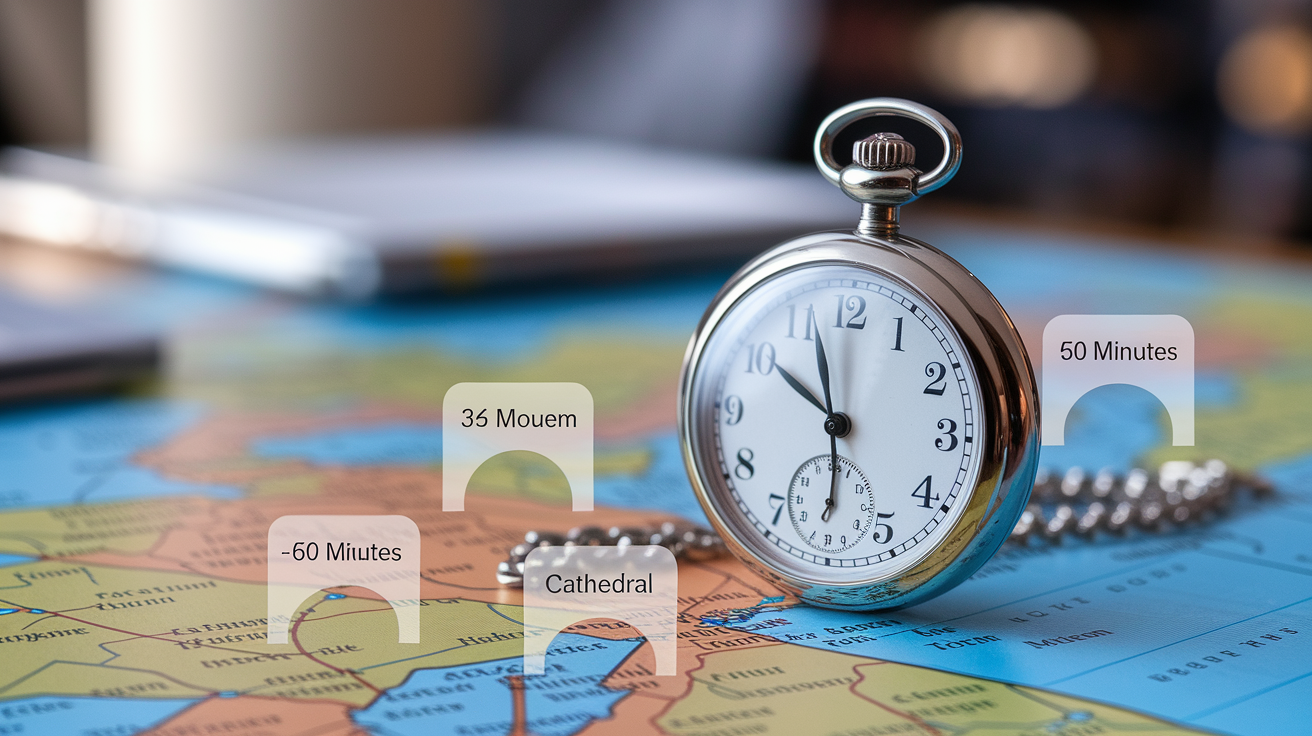
Most travelers underestimate how long things take. A major museum like the Louvre can absorb three or four hours if you’re actually looking at stuff. A smaller focused museum might take 90 minutes to two hours. Planning 45 minutes for a major museum means you’re either sprinting through or falling behind schedule immediately.
Guided tours run on fixed schedules, which simplifies planning but locks you into a specific window. A two-hour walking tour means two hours, plus getting there and some buffer after. Self-guided stuff gives you flexibility but requires honesty. If you read every plaque and take photos, plan for that. Viewpoints and photo stops are faster, typically 30 to 60 minutes including getting there, shooting pictures, and leaving.
Queues add unpredictable time. Popular spots can have 30-minute security lines even with pre-purchased tickets. Peak season? That stretches to 90 minutes or longer. Check recent reviews or Google’s “Popular Times” feature to see when crowds spike, then either show up early or pad your estimate.
| Attraction Type | Typical Duration | Notes |
|---|---|---|
| Major museum | 2–4 hours | Add queue time; fatigue hits after 3 hours |
| Small museum or gallery | 60–90 minutes | Faster if exhibits are minimal or specialized |
| Historic building or cathedral | 45–75 minutes | Longer if you climb towers or attend services |
| Viewpoint or photo stop | 20–40 minutes | Include walk to vantage point and return |
| Guided walking tour | 2–3 hours | Fixed schedule; arrive 10–15 minutes early |
Factoring in Transportation Between Stops

Transit time eats more of your day than you think. Walking a kilometer takes 12 to 15 minutes at tourist pace, which is slower than your normal stride because you’re navigating, checking your phone, or stopping for photos. If your map app says 10 minutes, assume 15. If it says 20, plan for 30 once you account for wrong turns and crosswalk delays.
Public transit adds wait time and transfer buffers. A subway ride might be eight minutes, but you’ll spend five to ten waiting on the platform, a few more figuring out which exit to take, then a short walk to your actual destination. Buses are slower and less predictable. Rideshares depend entirely on traffic. During rush hours or in congested tourist areas, a short trip can take twice as long as expected.
Here’s how to measure and validate travel times:
- Use Google Maps or a local transit app to check the route, then add five minutes to walking estimates and ten minutes to public transit trips.
- Cross-reference travel time with when you’ll actually be moving. Morning and evening rush hours slow everything down.
- Check recent Google or TripAdvisor reviews for mentions of construction, detours, or unexpected delays around major attractions.
- Save offline maps so you can navigate without hunting for WiFi or waiting for slow connections.
- Group nearby attractions into the same half-day block to cut total transit time and maximize time at actual stops.
Scheduling Meals, Breaks, and Downtime

Meals aren’t interruptions. They’re what keep the day functional. Plan a full lunch break of 60 to 90 minutes, ideally around midday after your morning anchor. This isn’t just about eating. It’s about sitting down, resting your feet, and giving your brain a break from processing new information. Trying to push through without a real meal leads to low blood sugar, bad decisions, and irritability.
Shorter rest breaks matter too. After two or three hours of active sightseeing, find a bench, a café, or a quieter corner and pause for 15 to 30 minutes. This doesn’t mean adding a formal stop to your itinerary. It means recognizing when your attention is drifting and giving yourself permission to sit. Skip these and fatigue builds until you hit a wall by mid-afternoon, which usually means abandoning evening plans or forcing yourself through something you’re too tired to enjoy.
Working with Opening Hours, Peak Times, and Crowds
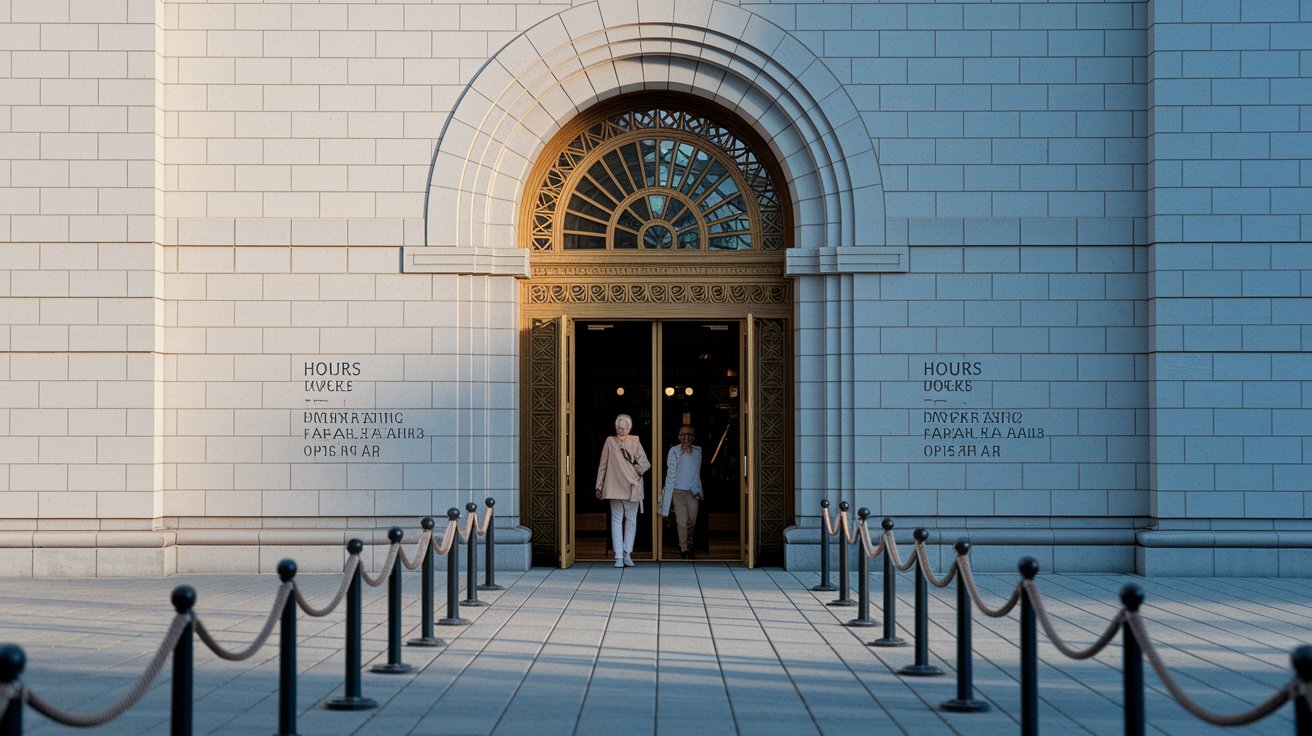
Attraction schedules shape your itinerary whether you plan for them or not. Many museums close one weekday per week, often Monday or Tuesday. If your top museum is closed the day you planned to visit, that entire day needs reworking. Check official websites for each attraction’s hours and closed days. Verify again a few days before your trip because hours change for holidays, renovation, or special events.
Crowds follow predictable patterns. Early mornings are almost always quieter. Most tourists don’t arrive at museums or landmarks until 10:00 or 11:00, which means the first entry window, often 9:00 or 9:30, offers the calmest experience. By 11:00, crowds peak and stay heavy until mid-afternoon. Late afternoon, after 15:00 or 16:00, crowds often thin again as people head to dinner or their hotels. Visit during these shoulder windows and you’ll spend less time in lines.
Timed entry tickets and advance reservations remove flexibility but guarantee access. Popular sites like the Anne Frank House or certain crown access monuments require booking weeks or even months ahead. If you don’t reserve in advance, you won’t get in at all. Even sites that allow walk-ups often have much shorter lines for ticket holders, which can save 30 to 60 minutes of standing around.
Operational constraints to check before finalizing your schedule:
Weekly closure days: Confirm your top attractions are open on the days you plan to visit.
Seasonal or holiday hours: Museums and landmarks often reduce hours or close entirely on public holidays.
Last entry times: Many sites stop admitting visitors 30 to 60 minutes before official closing time.
Peak crowd windows: Popular times run from late morning through mid-afternoon. Adjust your schedule to avoid these blocks when possible.
Tools and Apps That Help Build Itineraries

Digital tools make planning faster and more accurate, but they’re only useful if you actually use them before your trip, not while standing in a busy plaza trying to figure out your next move. Google Maps is the most versatile. Pin every planned stop, measure walking distances, and check transit routes. Save your custom map offline so you can access it without cell service or WiFi. Rome2Rio helps estimate travel time between cities or districts and shows all available transport options, which is especially helpful when you’re comparing bus, train, or rideshare.
Spreadsheet templates let you structure each day into time blocks. List your planned stops in order, assign estimated start and end times, and add travel time between each one. This visual layout makes it obvious when you’ve overpacked a day or left too much dead time. Offline map apps give you turn-by-turn navigation without draining mobile data, and many include saved points of interest. For meal planning, Google Maps and TripAdvisor both show restaurant locations, hours, and whether reservations are needed. Bookmark several options near each major stop so you’re never scrambling to find lunch.
Mapping and navigation: Google Maps (custom maps, offline mode) and Rome2Rio (multi-modal transport comparison).
Itinerary organization: Spreadsheet templates or simple note apps let you block out time and sequence stops visually.
Restaurant research: Google Maps and TripAdvisor for finding nearby options, checking hours, and noting reservation policies.
Offline access: Offline map apps (Maps.me, OsmAnd) ensure you can navigate without connectivity, which saves time and stress.
Building Buffer Time to Keep the Day Flexible
Buffer time is the difference between a functional itinerary and a stressful one. Plan 15 to 30 minutes of cushion around major transitions, between finishing one attraction and starting the next, or when switching from sightseeing to a meal. This buffer absorbs small delays: a longer museum visit, a missed bus, or the ten minutes you spent looking for a restroom. Without it, one delay cascades through the entire day and you’re perpetually late or skipping things.
Beyond transition buffers, schedule one full hour of unstructured flex time per day. This block has no assigned activity. If everything runs on schedule, use it to revisit a favorite spot, rest longer over coffee, or explore a side street you noticed earlier. If delays hit, this hour absorbs them without forcing you to cut a planned attraction. Flex time turns a rigid schedule into a realistic one, and it often becomes the part of the day you remember most fondly because you weren’t rushing.
Where to place buffers for maximum effectiveness:
Between major stops: Add 15 to 30 minutes after museums or long visits to account for lingering, transitions, and transit delays.
Around meal times: Build an extra 15 minutes before or after lunch in case the restaurant is slower than expected or you need to wait for a table.
Mid-afternoon: Schedule a full 60-minute flexible block with no assigned activity, letting you adjust for delays or extend a visit that’s more interesting than expected.
Avoiding Common Itinerary Planning Mistakes
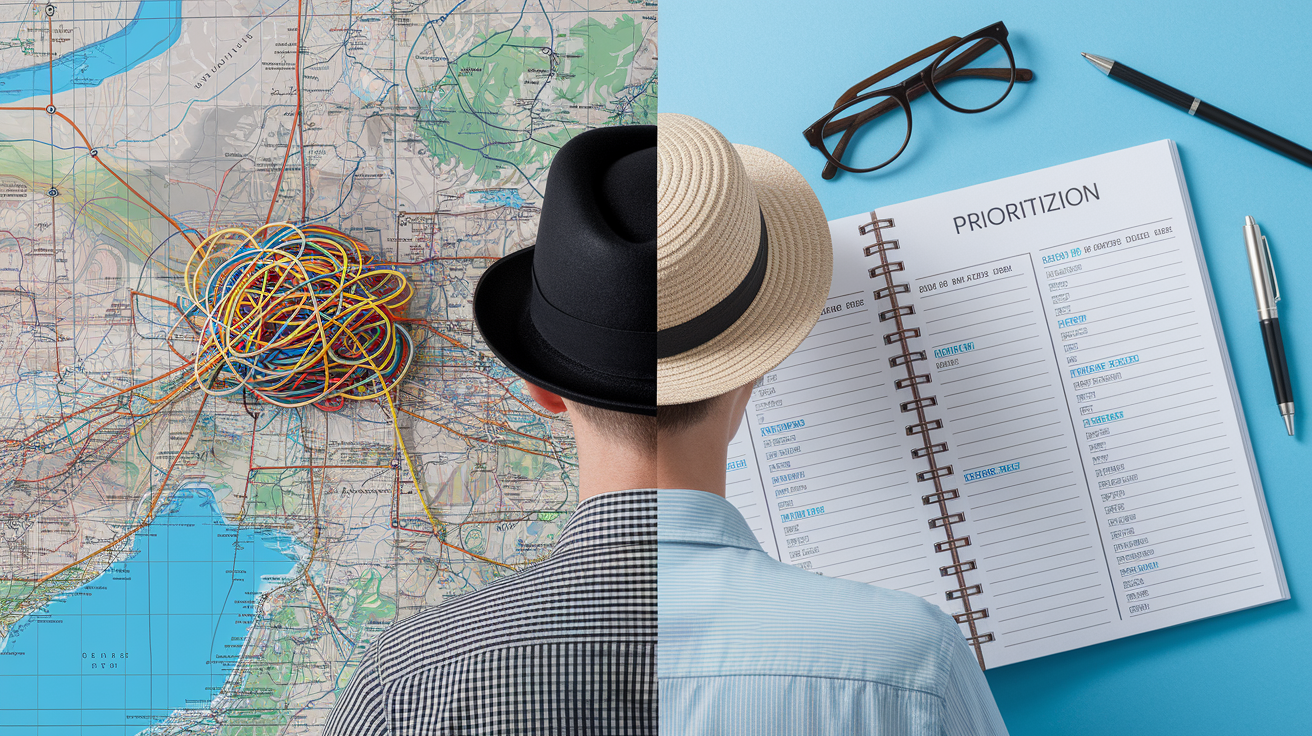
The most frequent mistake is overscheduling. Cramming seven or eight major stops into a single day because they all look interesting on paper. In practice, this means sprinting through everything, enjoying nothing, and arriving back at your hotel exhausted and frustrated. If your draft itinerary has more than six stops, start cutting. Prioritize depth over breadth. Two well-paced attractions beat five rushed ones.
Underestimating transit time is a close second. Map apps show ideal travel time, but they don’t account for getting lost, waiting for transportation, or the slower pace of navigating an unfamiliar city. Always add buffer time to the app’s estimate. Skipping meals or treating them as five-minute snack breaks leads to energy crashes and poor decisions by mid-afternoon. Plan real meal breaks. Ignoring jet lag on your first day sets you up for failure. If you just flew across time zones, cut your day-one itinerary in half and don’t schedule anything requiring focus or patience before 10:00. And don’t place far-apart attractions back-to-back without checking the actual travel time and route. What looks close on a city overview map can be 45 minutes of walking or multiple transit transfers in reality.
Overscheduling: Listing more than six major stops in one day, leading to exhaustion and rushed experiences.
Underestimating transit time: Trusting map apps without adding buffers for delays, wrong turns, and slower tourist pacing.
Skipping meals: Treating food as optional or assuming you’ll grab something quickly, which leads to energy crashes.
Ignoring jet lag: Loading up your first day with intensive activities when you’re still adjusting to a new time zone.
Poor geographic clustering: Scheduling attractions on opposite sides of the city back-to-back, wasting hours on unnecessary travel.
Sample One‑Day Itineraries for Inspiration
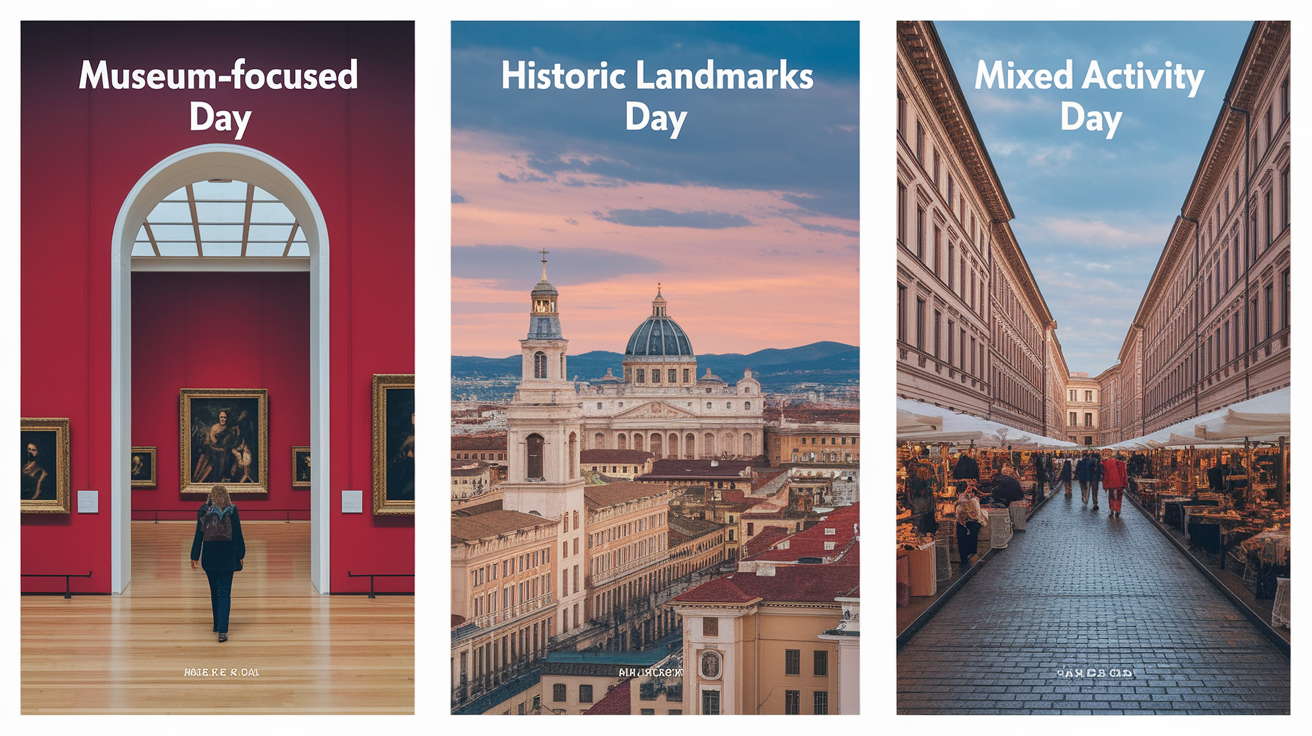
Sample itineraries show how abstract planning advice translates into a real day. These examples reflect different travel styles and demonstrate realistic pacing with built-in buffers and meals. Use them as templates, not rigid scripts, and adjust based on your own interests and energy levels.
Museum-Focused Day
- 09:00: Arrive at major art museum (pre-purchased ticket); spend 2.5 hours exploring key galleries.
- 11:30: Exit museum; 15-minute walk to nearby café district.
- 12:00: Lunch at casual restaurant (90 minutes).
- 13:30: Walk to smaller specialty museum or gallery (20 minutes).
- 14:00: Visit smaller museum (90 minutes).
- 15:30: Flexible buffer: rest at nearby park or coffee shop (60 minutes).
- 16:30: Optional short walk through adjacent historic district or return to hotel.
Historic Landmarks Day
- 08:30: Visit iconic landmark or cathedral at opening (60 minutes including queue).
- 09:45: Walk to second landmark (20 minutes).
- 10:15: Tour historic building or monument (60 minutes).
- 11:30: Walk to lunch spot in old town (15 minutes).
- 12:00: Lunch (75 minutes).
- 13:15: Guided walking tour of historic district (2 hours).
- 15:15: Flexible buffer or optional stop at viewpoint (45 minutes).
- 16:00: Return to hotel or continue exploring nearby shops.
Mixed Activity Day
- 09:00: Scenic morning walk or waterfront stroll (60 minutes).
- 10:15: Visit local market or food hall (45 minutes).
- 11:15: Walk to nearby attraction (15 minutes).
- 11:30: Tour mid-size museum or cultural site (90 minutes).
- 13:00: Lunch at restaurant near museum (90 minutes).
- 14:30: Flexible buffer: relax at café or explore side streets (60 minutes).
- 15:30: Visit final afternoon stop, viewpoint, park, or small gallery (60 minutes).
- 16:30: Return or continue with optional evening activity.
Final Words
Block your day into morning, midday, and afternoon blocks and choose 4–6 anchor stops so you don’t overreach.
Budget realistic stay times and add walking and transit estimates. This keeps the day moving without burnout.
Prioritize what matters, slot in 60–90 minute meals and short rests every 2–3 hours, and check opening hours.
Use simple tools and add 15–30 minute buffers plus one flexible hour to handle delays or time.
This guide shows exactly how to build a realistic daily itinerary for sightseeing.
Use the steps as a template, tweak for your pace, and enjoy a smoother, relaxed day.
FAQ
Q: Is there an AI tool to make a travel itinerary? Can ChatGPT plan a trip?
A: There are AI tools, and ChatGPT can plan a trip by drafting routes, timing, and priorities; always double-check opening hours, transit estimates, and bookings before you finalize the itinerary.
Q: How do I create a day trip itinerary?
A: To create a day trip itinerary, pick 1–2 anchor sights, group nearby stops, plan 4–6 total visits, schedule morning/midday/afternoon blocks, and add a 60–90 minute lunch plus short breaks.
Q: What are common itinerary mistakes?
A: Common itinerary mistakes are overscheduling, underestimating transit and queues, skipping meals or rest, ignoring opening days, and pairing far-apart sights back-to-back; add buffers and realistic pacing instead.