

Think you always pay to change a flight? Think again.
Most major U.S. airlines dropped change fees on standard fares, and a few simple rules and timing moves let you rebook for free.
This short guide shows exactly when to act and what to ask for.
You’ll learn the 24-hour booking rule, schedule-change waivers, fare-class checks, elite perks and credit-card protections, plus the timing moves that actually save you money.
Read on to change a ticket without a nasty fee.
The Fastest Ways to Change a Flight Without Paying a Fee
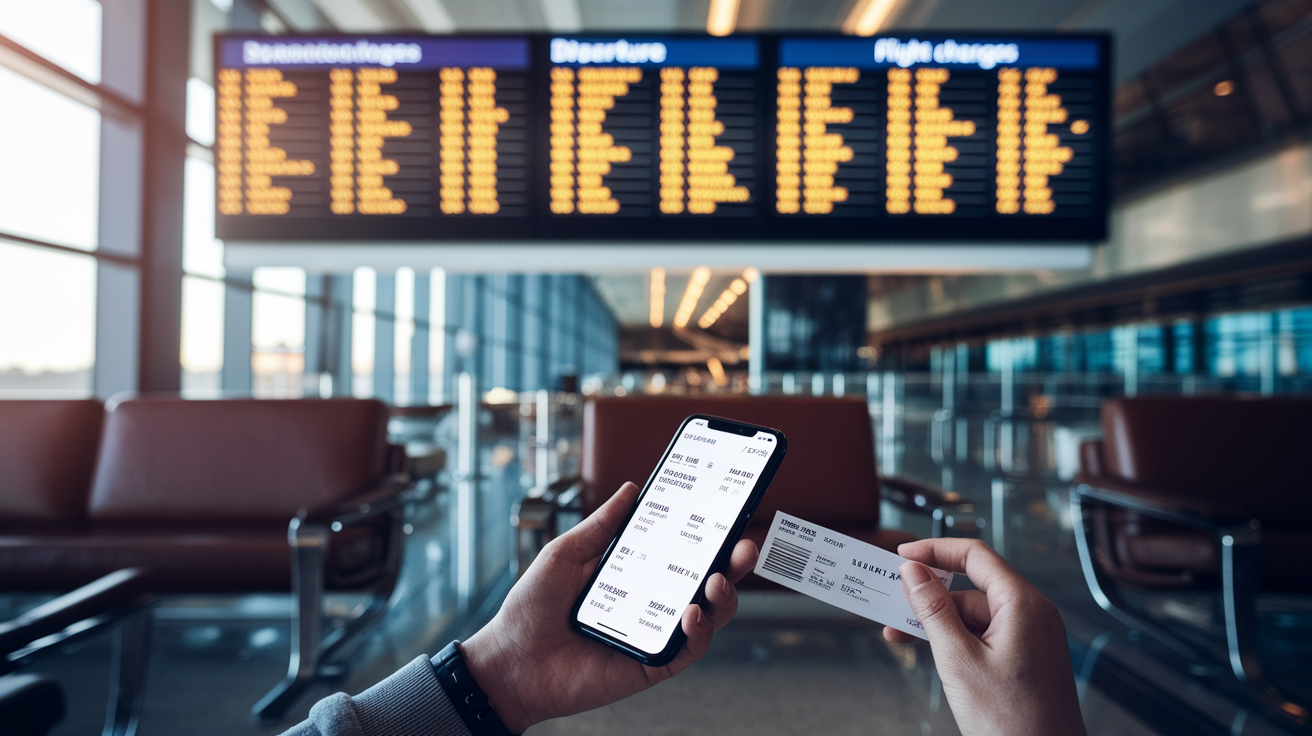
Most major U.S. airlines got rid of change fees on standard economy and premium tickets back in 2020 and 2021. If you booked a regular economy seat on United, American, or Delta, you can usually move your flight without a fee. You just pay whatever difference shows up in the fare. This applies to domestic routes and a lot of international trips that start in the U.S. Basic economy fares? Almost always excluded.
Even when airlines still charge change fees, you can dodge them if you move fast or know when the airline owes you flexibility. The 24-hour booking window, schedule changes the airline makes, elite status, and certain bundled fares all create ways to rebook at no cost. Timing and knowing your fare class are your two biggest tools.
If you need to change a ticket today, try these first:
- Act within 24 hours of booking – U.S. carriers have to let you cancel or change for free if you bought the ticket at least seven days before departure.
- Wait for the airline to change the schedule – Any shift of 60 to 90 minutes or more usually qualifies you for a free rebook or refund, depending on the carrier.
- Check your fare class – If you skipped basic economy, most legacy carriers now charge zero change fees. You only cover fare increases.
- Use elite status or credit card perks – Mid-tier and top-tier loyalty members often get free same-day changes. Some premium travel cards reimburse fees or include trip-change coverage.
- Request a waiver for documented emergencies – Illness, bereavement, or jury duty can lead to fee waivers if you show supporting documents like a doctor’s note or death certificate.
Using the 24-Hour Free Cancellation and Change Rule

U.S. Department of Transportation regulations require every airline to offer a full refund or free hold if you cancel within 24 hours of purchase, as long as the flight leaves at least seven days later. This rule covers all tickets, including basic economy. Works for both domestic and international trips that touch U.S. soil. Most airlines let you cancel online and get a full refund to your original payment method, no questions asked.
You can also use the 24-hour window to change your flight instead of canceling. Call customer service or use the “manage my booking” tool on the website. Some carriers let you swap to a different date or route within that first day without triggering fees or fare differences, though policies vary. If the new flight costs more, you may still pay the difference, but the change fee itself gets waived.
Here’s how to execute a no-fee change during the 24-hour window:
- Log in to your airline account or find your confirmation email – You need your booking reference and last name.
- Navigate to “Manage my booking” or call the airline – Online tools are faster for simple date swaps. Phone agents can handle complex multi-city changes.
- Select your new flight and confirm – If the system shows a change fee, remind the agent you’re within 24 hours of purchase and the DOT rule applies.
- Verify the refund or new ticket is issued – Check your email for a revised itinerary and confirm no fees were charged. If they were, request immediate reversal.
Airline Policies That Already Waive Change Fees

Delta, United, and American got rid of change fees on most economy and premium cabin tickets in 2020. That shift became permanent across their networks. You can now move a standard economy booking to a different date or route without paying a change fee. You just cover any increase in airfare. The same zero-fee policy extends to many international trips that leave from the United States, including transatlantic and transpacific routes. Basic economy remains the exception. Those tickets are typically non-changeable or come with serious restrictions.
Southwest has never charged change fees. You pay only the fare difference when you rebook. If the new flight costs less, you get a travel credit for the difference. Alaska Airlines also removed change fees on most fares after 2020, though Saver (basic) fares come with tight rules. JetBlue followed for most fare types, excluding its Blue Basic product. Hawaiian Airlines waives fees on Main Cabin and higher, leaving only basic-economy bookings subject to restrictions.
Frontier and Spirit still use tiered fee structures. Frontier charges nothing if you change more than 60 days out, then $49 for changes made 59 to seven days before departure, and $99 within six days. Spirit runs a similar ladder. Both carriers offer add-on bundles (Frontier’s “The Works,” Spirit’s premium tiers) that remove or reduce fees, so buying up at booking can pay off if you expect changes.
| Airline | Eligible Fare Types | Exceptions |
|---|---|---|
| Delta, United, American | Standard economy, premium economy, business, first | Basic economy excluded |
| Southwest | All fares | None; only pay fare difference |
| Alaska, JetBlue | Main/standard fares | Saver/Blue Basic limited or non-changeable |
| Frontier, Spirit | Standard and bundled fares | Low-cost fares incur tiered fees unless bundle purchased |
Leveraging Elite Status and Loyalty Program Benefits

Mid-tier and top-tier elite members in most airline loyalty programs get free same-day confirmed changes or standby privileges that non-elites pay $75 to $150 to access. Alaska MVP Gold and Gold 75K members, for example, can confirm a same-day move to an earlier or later flight on the same route without a fee. United MileagePlus Premier 1K members get waived fees on most changes. American AAdvantage Executive Platinum holders enjoy similar flexibility. These perks can save real money when plans shift at the last minute.
Elite status also opens priority customer-service lines, which means shorter hold times when you need an agent to help with a complex itinerary change. Some programs let elites redeposit award miles without penalty if award availability improves or plans change, a benefit that can be worth hundreds of dollars on international premium-cabin tickets. Check your program’s published benefits chart to see exactly which tier unlocks fee waivers and confirm the same-day change window. It’s usually limited to flights departing the same calendar day.
Typical elite perks that eliminate change fees:
- Free same-day confirmed changes – Move to any flight on the same route departing the same day, subject to seat availability.
- Priority standby – Board an earlier flight if space opens, without paying the standard standby fee.
- Flexible award redeposits – Cancel or change award tickets and get miles back at no cost, often up to close-in departure.
Changing Flights for Free When the Airline Alters the Schedule

Any time an airline shifts your departure or arrival by a meaningful margin, usually 60 to 90 minutes or more, you become eligible for a free change or full refund. The exact threshold varies by carrier. Some use 90 minutes, others define “significant” as any overnight change or a shift that affects your connection. Airlines notify affected passengers by email and often post schedule-change waivers on their websites. If you get a schedule-change notice, you have leverage to move to any available flight on the same route or request a refund to your original payment method. No change fee and no fare difference.
Schedule changes also apply if the airline cancels your flight outright or moves you from a nonstop to a connection. In those cases, the carrier must rebook you on the next available service at no cost. You can ask for alternative routings or earlier departures if your original plan no longer works. If no acceptable option exists, request a full refund instead of a voucher. DOT rules require airlines to refund canceled flights when they can’t provide comparable service.
To claim your no-fee change after a schedule shift:
- Check your email for an airline schedule-change notice – Look for messages with subject lines like “Important update to your trip” or “Flight schedule adjustment.”
- Log in to the airline’s manage-booking portal or call the number in the email – Review the new itinerary and compare it to your original booking.
- Request a different flight or full refund – If the new schedule doesn’t work, ask the agent to move you to another date or route, or issue a refund to your credit card rather than a travel credit.
Using Credit Card Travel Protections to Avoid Fees

Premium travel credit cards often include trip cancellation and trip interruption insurance that reimburses prepaid, nonrefundable expenses when you must cancel or change travel for covered reasons. The Chase Sapphire Reserve, for example, offers up to $10,000 per person in trip cancellation coverage if illness, injury, severe weather, or another listed event forces you to cancel. If you use the card to pay for your ticket and then need to change it due to a qualifying emergency, you can file a claim to recover the change fee and any fare difference you paid. Coverage terms vary, so read your card’s benefit guide to confirm which reasons are covered and what documentation you must submit.
Some cards also include annual travel credits that automatically offset airline fees. The Chase Sapphire Reserve provides a $300 travel credit each calendar year that applies to any travel purchase, including change fees. The American Express Platinum offers up to $200 in annual airline fee reimbursements once you select a qualifying carrier, though the issuer determines which purchases count. Capital One Venture and Venture X cards let you redeem miles at a fixed rate to erase travel charges from your statement, which can cover a change fee if you have enough miles banked.
To use credit card protections well, you need to move fast and keep records. File trip-cancellation claims within the timeframe specified in your benefit guide, usually 20 to 60 days after the event. Save all receipts, airline correspondence, and medical or emergency documentation. If your card offers an automatic travel credit, the charge will usually appear first on your statement and then be offset by a credit within one to two billing cycles.
Common coverage triggers that may eliminate or reimburse a change fee:
- Documented illness or injury – Yours or an immediate family member’s, with a physician’s note or hospital record.
- Severe weather or natural disaster – Official advisories or airline waivers that prevent travel.
- Jury duty or military orders – Summons or deployment orders that conflict with your travel dates.
- Death of an immediate family member – Death certificate or obituary as proof.
When Emergencies Allow Free Flight Changes

Airlines evaluate true emergencies on a case-by-case basis and may waive change fees when a traveler can document serious illness, hospitalization, death in the immediate family, jury duty, or military deployment. The key shift over the past few years is that carriers now require written proof rather than accepting verbal claims. If you or a traveling companion fall ill, you’ll need a doctor’s letter on practice letterhead that includes the diagnosis date, the physician’s signature, and a statement that travel is unsafe or inadvisable. Bereavement requests typically require a death certificate or funeral-home notice, plus proof that the deceased was an immediate family member.
Natural disasters and severe weather that prompt official government travel warnings can also trigger fee waivers, but only if your specific flight is affected or the airline issues a travel waiver for your route and dates. Jury duty waivers require a copy of the summons showing your name and the dates you must serve. Military waivers need official orders with deployment or reassignment dates. Always call the airline before making changes if you plan to request an emergency waiver. Agents can note your account and guide you through the documentation process.
Airlines usually ask for the following documentation to approve an emergency waiver:
- Medical emergencies – Physician’s letter on letterhead with diagnosis, treatment dates, and a statement that travel should be postponed. Hospital discharge summary if applicable.
- Bereavement – Death certificate, obituary, or funeral notice, plus documentation proving relationship (birth certificate, marriage certificate, or family register if requested).
- Jury duty or legal obligation – Court summons or subpoena showing your name and the dates you’re required to appear.
Alternative Options If You Cannot Change for Free

If none of the no-fee paths apply, you still have fallback strategies that reduce cost and preserve flexibility. Same-day standby is often the cheapest option when you want an earlier or later flight on the same route. Most carriers charge $75 to $150 for confirmed same-day changes if you’re not an elite member, but standby is sometimes free or lower cost. You just wait at the gate for an open seat. Standby works best on busy routes with frequent departures, where load factors vary and seats open up close to boarding.
Travel credits and vouchers offer another way to cut out-of-pocket expense. If you cancel a nonrefundable ticket, most airlines issue a credit valid for 12 months from the original issue date. You can use that credit to book a new flight. You’ll only pay any fare difference plus the cancellation fee, if one applies. Some pandemic-era credits were extended to 24 months, but most have gone back to the standard 12-month window, so check your specific voucher’s expiration date. If a lower fare appears after you book, some carriers allow reissuing the ticket for the new lower price. You pay only the fare difference in reverse (receive a credit) or a small reissue fee.
Switching to a more flexible fare class at booking or during a fare sale can also pay off. If you originally bought a basic-economy seat and then see a sale on standard economy, you can sometimes pay the difference to upgrade, which unlocks free changes going forward. And calling an agent and asking for a supervisor can yield results that online tools won’t, especially if you’re polite, explain your situation clearly, and ask for a “goodwill waiver” based on loyalty or circumstance.
Compare these backup strategies when a true free change isn’t available:
- Same-day standby – Free or low cost. Works only on the same route and departure day. Seat not guaranteed but often opens on busy routes.
- Travel credits/vouchers – Preserve ticket value. Valid for 12 months. You pay fare difference and any cancellation fee if applicable.
- Switching fare types – Pay the difference to move from basic economy to standard economy during a sale. Unlocks no-fee changes afterward.
- Agent negotiation – Call and request a supervisor. Provide documentation and ask for a discretionary waiver based on loyalty, elite status, or special circumstance.
Final Words
You learned the fastest, no‑nonsense ways to change a ticket without paying: the 24‑hour rule, airlines that dropped fees, elite perks, schedule changes, credit‑card protections, documented emergencies, and low‑cost alternatives.
Each section gave step‑by‑step moves and short checklists so you can act fast. Start with the 24‑hour window, then check airline policy and card benefits.
Keep simple backups: standby, travel credit, or switching fare types if a free change isn’t possible.
Use this as your quick reference on how to change a flight without fees so you can adjust plans with less stress and keep moving forward.
FAQ
Q: What is the airport 45 minute rule?
A: The airport 45 minute rule means you should be at the gate ready to board about 45 minutes before departure. Airlines often close boarding 30–45 minutes early, so allow time for security and bag drop.
Q: Can I reschedule my flight without any charges? / Do airlines let you change flights for free?
A: You can sometimes reschedule without charges. Free changes happen under the 24‑hour rule, airline schedule changes, elite status perks, or permanent waived-fee policies—basic economy and some international fares usually still incur fees.
Q: Can you reschedule an Ethiopian Airlines flight?
A: You can reschedule an Ethiopian Airlines flight depending on the fare rules and reason. Some tickets allow free or fee-based changes for schedule disruptions; check your booking terms or contact Ethiopian Airlines or your travel agent.