

Think rainy season ruins tropical trips? Think again.
You can go from sun to soaked in 20 minutes, and everything stays damp in 90% humidity.
The trick isn’t avoiding all rain.
It’s packing smart so you stay dry, comfortable, and ready when the sky opens.
This checklist gives the few fast-drying clothes, backup dry storage, and footwear rules that actually work in hot, wet places.
Pack these basics once, and you won’t waste time drying gear or worrying about soaked electronics.
Core Essentials for a Tropical Rainy Season Packing List
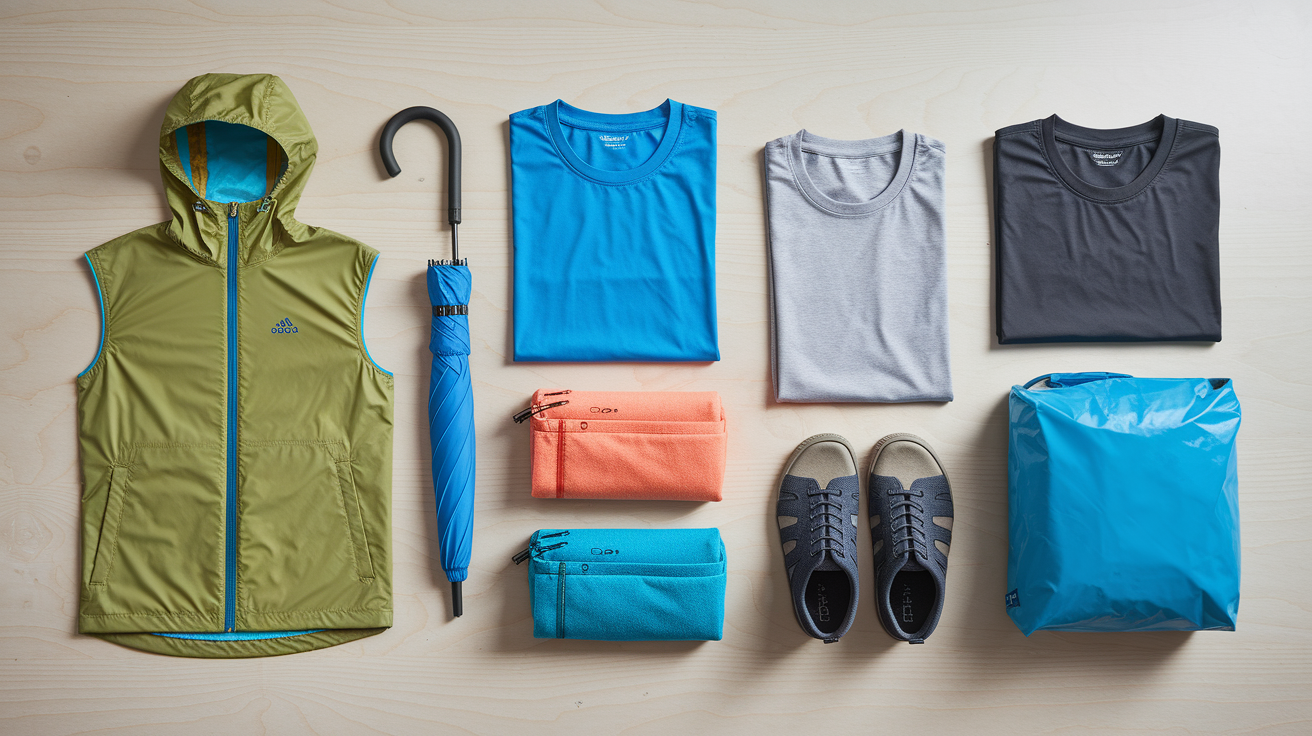
Tropical rain doesn’t work like rain back home. You’ll wake up to bright sun and temps already in the 80s, then twenty minutes later you’re soaked through. And just as fast, it stops. The real problem isn’t getting wet. It’s staying wet in ridiculous humidity where nothing dries and everything smells off within a day.
Your gear needs to handle rain and heat at the same time. Cotton becomes dead weight. Heavy layers make you want to cry. You want clothes and shoes that dry fast, plus a system to keep electronics, documents, and at least one dry outfit safe no matter what happens. Most people pack too much stuff and protect too little of it.
Here’s what actually works for a short tropical trip during rainy season:
- 1 lightweight, packable rain jacket with a hood
- 1 compact travel umbrella that doesn’t flip inside out
- 1 packable poncho with pouch
- 2–3 moisture-wicking shirts (synthetic or merino, not cotton)
- 1–2 quick-dry pants or shorts
- 1 pair water-resistant walking shoes
- 1 pair waterproof sandals or slides
- 1 quick-dry microfiber towel
- 1 waterproof backpack cover or dry bag
- 1–2 smaller dry bags or heavy-duty ziplock bags for electronics and documents
Waterproof Outerwear and Clothing Choices for Wet Tropical Weather
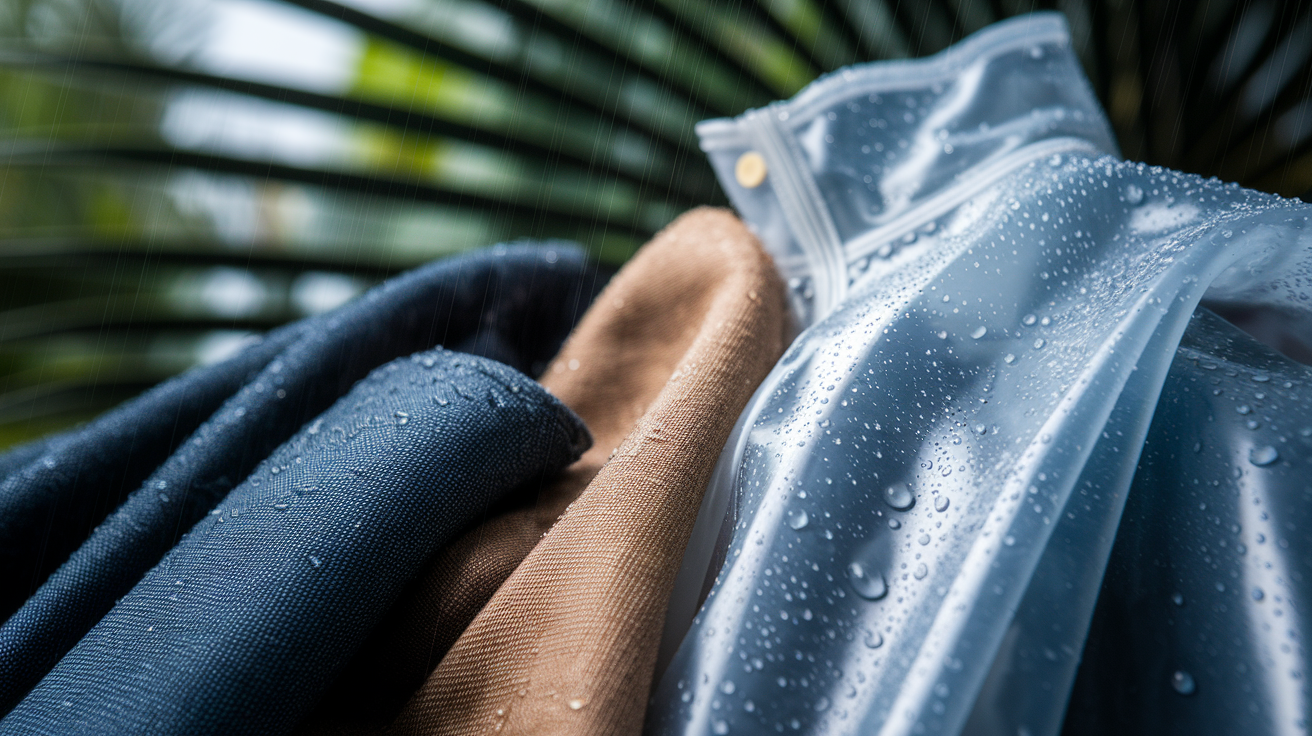
Cotton holds water like a sponge. Jeans take two full days to dry when humidity’s at 90%. Light linen pants show every mud splash. In tropical rain, what your clothes are made of matters way more than how they look.
Quick-dry synthetics are your baseline. Polyester, nylon, ripstop nylon. They pull moisture off your skin and dry within hours even when you’re stuck hanging wet stuff in a humid hotel room. Linen can work if you’re okay with wrinkles and have decent airflow where you’re staying. Merino wool dries slower than synthetics but stays warm when damp and fights odor better than anything.
Breathable rain jackets and ponchos solve different problems. A jacket with underarm vents keeps rain out while letting body heat escape, which you need when you’re walking around in 85-degree weather. Something like the Adidas Tiro 24 works because it packs small and breathes well. Ponchos are faster to throw on and off, plus they cover your whole body and your daypack. When showers last ten minutes, a poncho beats messing with jacket zippers.
Some people bring breathable rain pants for long hikes or boat trips. Unless you’re spending hours outside in heavy rain, quick-dry hiking pants with water-resistant finish usually get the job done. If you’re planning jungle treks or sitting on wet boats all day, lightweight rain pants make sense. Look for UV-protective fabrics if you’ll be switching between sun and sudden storms. A lot of quick-dry hiking shirts have UPF 30+ built in, so you get double duty when clouds clear.
Footwear Strategy for Tropical Rain: Dry, Wet, and Multi-Use Shoes

Bring at least two pairs of shoes. One pair that can get soaked, one pair that stays dry for nicer meals, flights, or indoor spaces. Your “wet pair” should be waterproof sandals, water-resistant walking shoes, or breathable trail runners that dry overnight. The Adidas Break Start Shoe runs under $100 and works as a lightweight water-resistant option. Your “dry pair” can be casual sneakers, flats, or slip-ons that you protect like your life depends on it and only wear when conditions are stable.
If you’re doing serious hiking in muddy or rocky areas, think about waterproof trail shoes or lightweight hiking boots. Sandals with good tread work well for beach-to-town transitions and dry fast. Don’t bring multiple pairs of closed-toe shoes unless you have a real plan to dry them. A portable shoe dryer or moisture-absorbing inserts help, but they add weight and take time.
Footwear care and blister prevention:
- Anti-chafe balm for toes and heels before long wet walks
- Moisture-absorbing shoe inserts to speed overnight drying
- Quick-dry synthetic or merino socks (bring 3 pairs, wash and rotate)
- Flip-flops or slides as a third emergency pair if everything else is trashed
- Dark-colored shoes to hide mud and water stains
- Anti-fungal foot powder if you’re prone to issues in damp conditions
Bags, Dry Storage, and Electronics Protection in Rainy Tropical Destinations
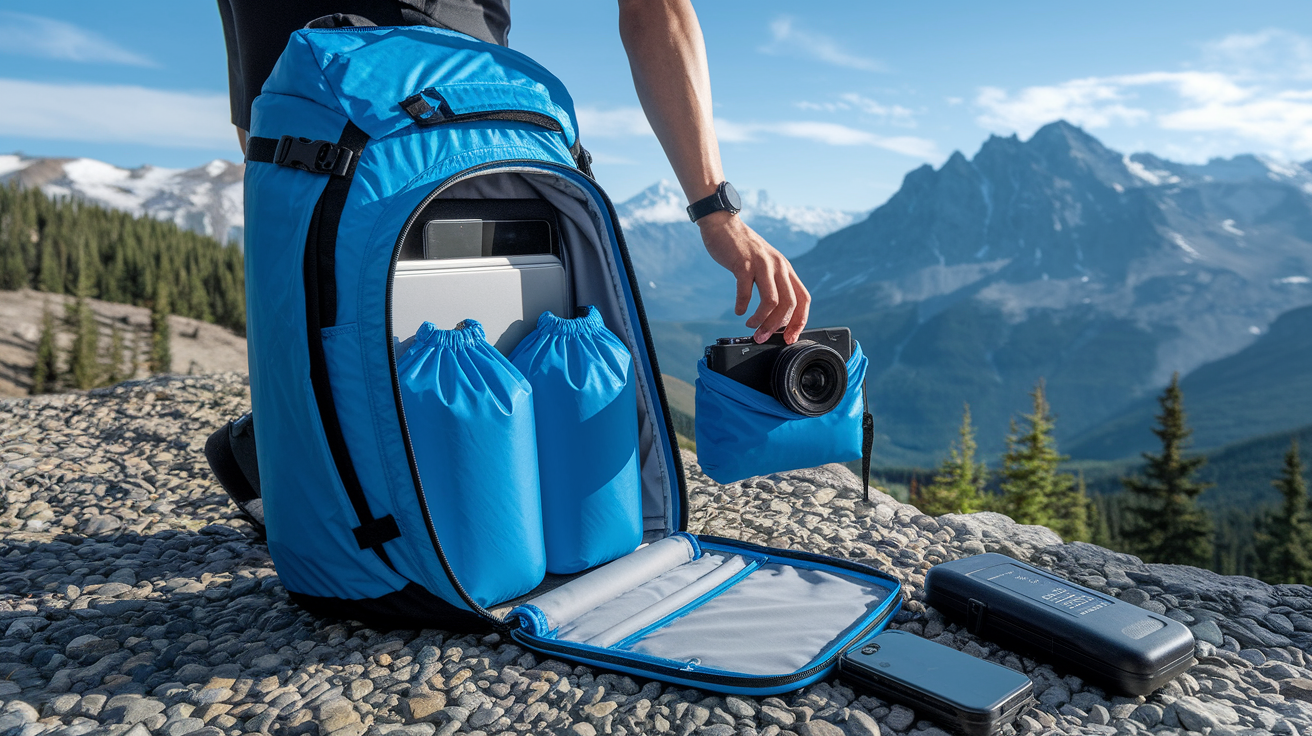
Waterproof backpacks aren’t always waterproof. A traveler once lost a brand-new Canon camera to a rainstorm because their “waterproof” pack leaked at the seams. Layer your protection. Use a waterproof backpack cover or a true dry bag as your outer shell, then add individual Ziplocs, small dry sacks, or waterproof pouches inside for anything that can’t get wet. Phone, chargers, passport, camera, extra cash.
Heavy-duty garbage bags with drawstrings work surprisingly well as budget dry bag liners. Drop one inside your main backpack or daypack, load your gear, twist the top, tie it off. If you’re carrying photography equipment or expensive electronics, get a real dry bag or waterproof stuff sack from brands like Aqua Quest or IDRYBAG. A 10-liter dry bag fits a camera body, two lenses, and chargers. A 20-liter bag can hold a change of clothes and toiletries.
Keep a waterproof phone case accessible at all times. You’ll pull your phone out constantly for maps, photos, translation apps. A basic waterproof pouch with a lanyard costs less than ten bucks and prevents one expensive mistake. For documents, use a waterproof document pouch or a ziplock freezer bag. Double-bag if you’re paranoid.
Layered waterproofing system for a daypack:
- Outer layer: waterproof backpack cover or rain-resistant pack
- Inner liner: heavy-duty trash bag or large dry sack
- Item-level protection: individual Ziplocs or small dry bags for phone, wallet, documents, batteries
- Quick-access waterproof pouch: clipped to a strap for phone and small essentials
Tropical Rain Clothing Accessories and Comfort Items
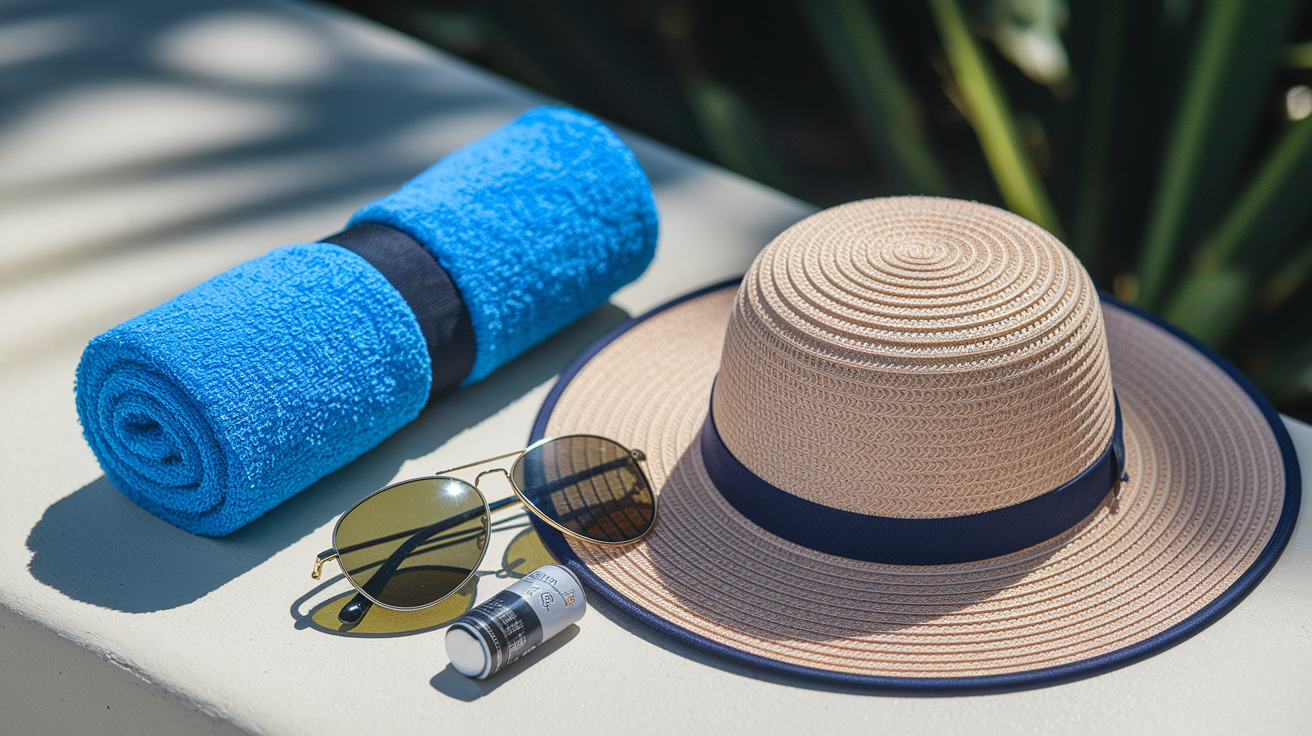
A quick-dry microfiber towel does more than dry you off after a shower. Use it to wipe down after a downpour, dry your phone or glasses, sit on a wet bench, soak up water inside your bag. They pack smaller than a sandwich and dry in under an hour. Bring one that’s at least hand-towel size.
A wide-brimmed waterproof hat keeps rain out of your eyes better than a hood alone. It also gives you hands-free visibility when you’re navigating or taking photos. Look for hats with a chin strap so wind doesn’t rip it off during a storm. Some foldable styles pack flat in a side pocket.
Extras that solve small problems:
- Anti-chafe balm to stop skin irritation from wet clothes rubbing during long walks
- Bandana or lightweight scarf for wiping sweat, covering your head, or improvising solutions
- Sunglasses with a retainer strap (tropical sun is intense when clouds part)
- Small microfiber cloth for cleaning glasses and phone screens after rain exposure
- Dryer sheets in your luggage to cut down odors when damp clothes sit in high humidity
Packing Techniques for Humid and Wet Climates
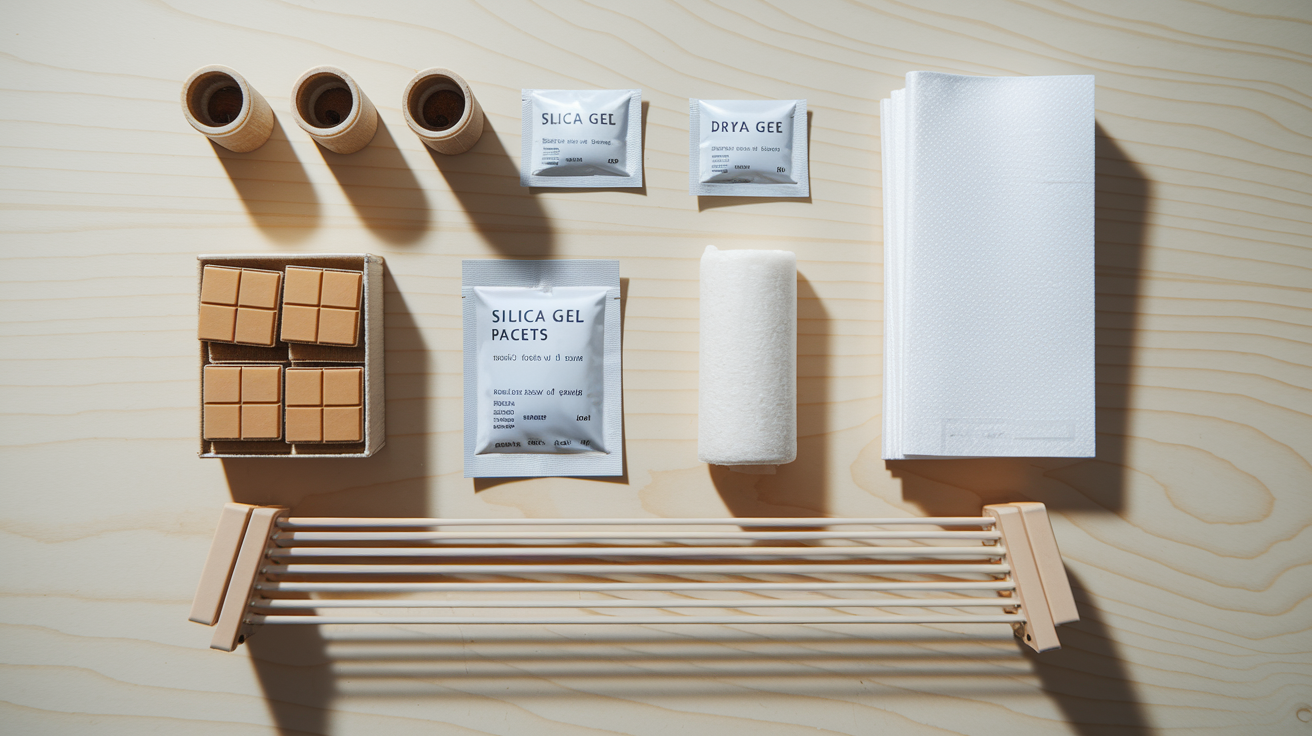
Humidity above 90% turns your suitcase into a damp closet. Clothes don’t dry. Odors build. Mildew starts within 48 hours if you’re not careful. Packing cubes help by keeping wet and dry items separated, but you need a system that assumes moisture will get into everything.
Use compression sacks for clean clothes and keep a separate waterproof bag for anything damp or dirty. A lot of local laundromats in tropical destinations don’t have dryers, so plan for air-drying and bring travel laundry soap sheets or a small bottle of concentrated detergent.
Silica gel packets (those little “do not eat” pouches from shoe boxes) absorb moisture inside closed bags and luggage. Collect a handful and toss them into your main bag and camera case. Dryer sheets reduce musty smells and make repacking less miserable. A portable clothesline or a few feet of paracord lets you hang wet items in your room overnight. String it across the bathroom or balcony and use small clothespins or binder clips.
| Item | Purpose | Best For |
|---|---|---|
| Packing cubes | Separate clean/dirty/wet clothes by category | Travelers with multiple stops or frequent repacking |
| Compression sacks | Reduce volume of bulky quick-dry layers | Backpackers and carry-on-only travelers |
| Silica gel packets | Absorb moisture inside sealed bags | Electronics, camera gear, closed luggage storage |
| Portable clothesline | Hang wet clothes for faster air-drying | Budget accommodations without in-room drying options |
Health, Safety, and Weather-Related Essentials for Tropical Rain Travel

Warm rain means more bugs. Mosquitoes thrive during rainy season, and standing water creates breeding zones everywhere. Bring DEET-based insect repellent or picaridin, and reapply it often, especially near dusk when mosquito activity peaks. If you’re staying in budget places or jungle lodges, a compact mosquito net adds protection at night.
UV exposure stays high even when it’s cloudy and raining. Sunscreen isn’t optional. Use a water-resistant SPF 30+ formula and keep a small tube in your daypack. If you’re switching between sun and sudden storms all day, reapply after toweling off. Tropical sun burns fast. You won’t feel it building until it’s too late.
Power outages happen during heavy storms, and it gets dark by 6:00 PM in most tropical regions year-round. A small headlamp or powerful flashlight makes navigating dark hotel hallways, trails, or streets safer and way less stressful. Bring a portable power bank with at least one full phone charge so a blackout doesn’t leave you disconnected.
Pack these health and safety items:
- Insect repellent with DEET or picaridin
- Water-resistant sunscreen (SPF 30+)
- Travel first-aid kit with bandages, antiseptic wipes, blister treatment
- Anti-diarrheal medication and oral rehydration salts
- Water purification tablets or a filtered water bottle if tap water is unsafe
- Headlamp or small flashlight with extra batteries
- Portable phone charger (10,000 mAh minimum)
Planning and Adapting Your Itinerary for Rainy Season in the Tropics

Tropical rain usually follows a pattern. Sunny mornings, cloudy by early afternoon, rain from mid-afternoon into evening. Plan outdoor hikes, beach time, and walking tours before 2:00 PM. Save museums, indoor markets, cafes, and cooking classes for late afternoon and evening when storms are most likely.
Check the local weather app every morning and adjust your day based on current conditions, not the forecast from three days ago.
Have a backup plan for every outdoor activity. If you’re heading to a waterfall or national park, know where the nearest covered pavilion, visitor center, or cafe is. If rain starts, you can wait it out or pivot to an indoor option nearby. Short tropical downpours often last 20–30 minutes, then clear. If you’re geared up properly, you can keep going.
Five rules for itinerary flexibility during rainy season:
- Check weather daily and plan outdoor stuff during morning windows when skies are usually clearer.
- Pack a daypack with rain gear every time you leave your room, even if the forecast looks good.
- Keep a running list of indoor backups (museums, markets, cooking classes, spas, covered food halls) so you’re never stuck waiting out rain with nothing to do.
- Use local weather apps and alerts, not just your phone’s default forecast, for more accurate regional updates.
- Book travel insurance that covers weather disruptions if your trip includes expensive tours or tight flight connections during peak rainy months.
What Not to Pack for a Tropical Rainy Season Trip
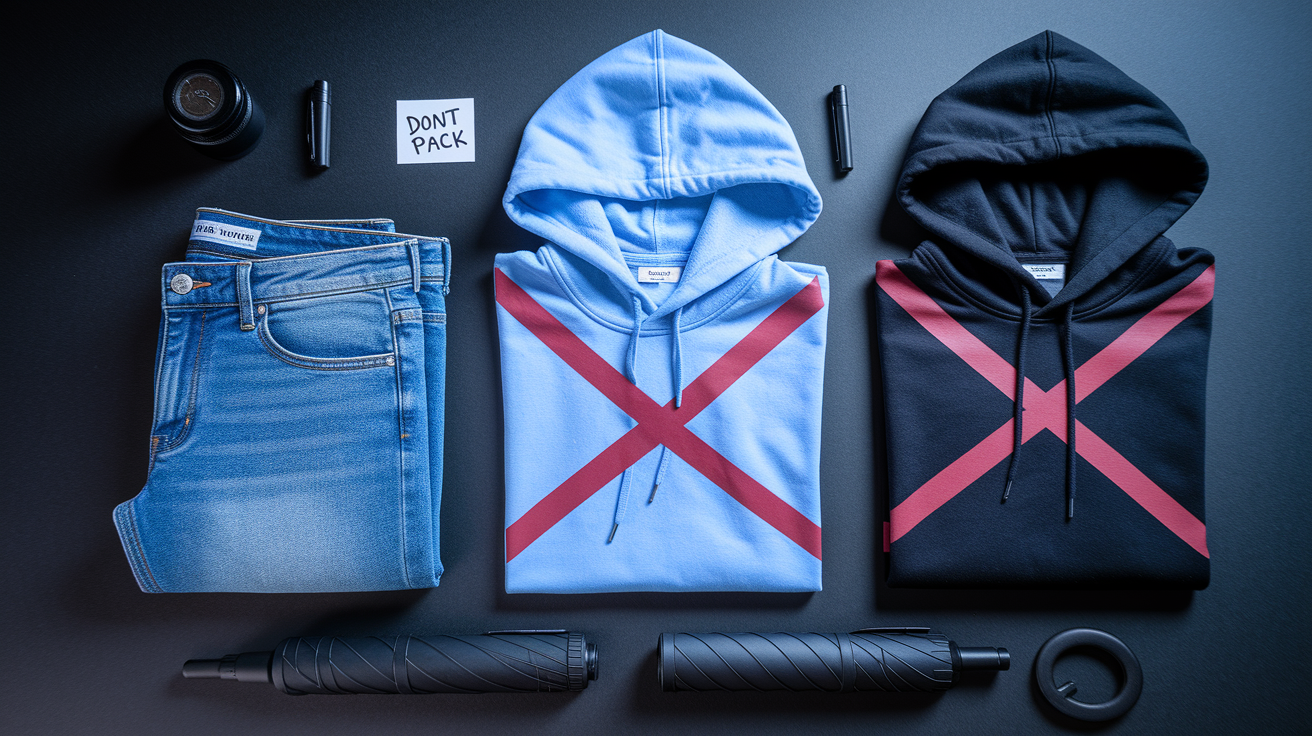
Leave the jeans at home. Cotton pants, cotton T-shirts, heavy hoodies, anything that takes more than four hours to air-dry will make your trip miserable. Light-colored fabrics show mud, water stains, and sweat instantly. Tropical rain comes with splash and dirt. Stick to dark or patterned quick-dry clothing that hides the mess and dries overnight.
Don’t bring multiple pairs of closed-toe shoes unless you have a way to dry them. Two pairs that stay wet for two days means blisters, odor, and serious discomfort. If you’re not hiking, one pair of water-resistant shoes and one pair of waterproof sandals cover almost every situation.
Skip bulky warm layers unless you’re heading to high-elevation cloud forests. Most tropical lowlands stay warm even during rain.
Skip these items:
- Heavy cotton clothing, especially jeans and cotton T-shirts
- Light-colored pants or shoes that stain easily
- Multiple closed-toe shoes without a drying plan
- Bulky fleece or insulated jackets for lowland tropical travel
- Umbrellas larger than compact travel size (they’re hard to pack and break in wind)
Optional Add-Ons and Destination-Specific Adjustments for Tropical Rain
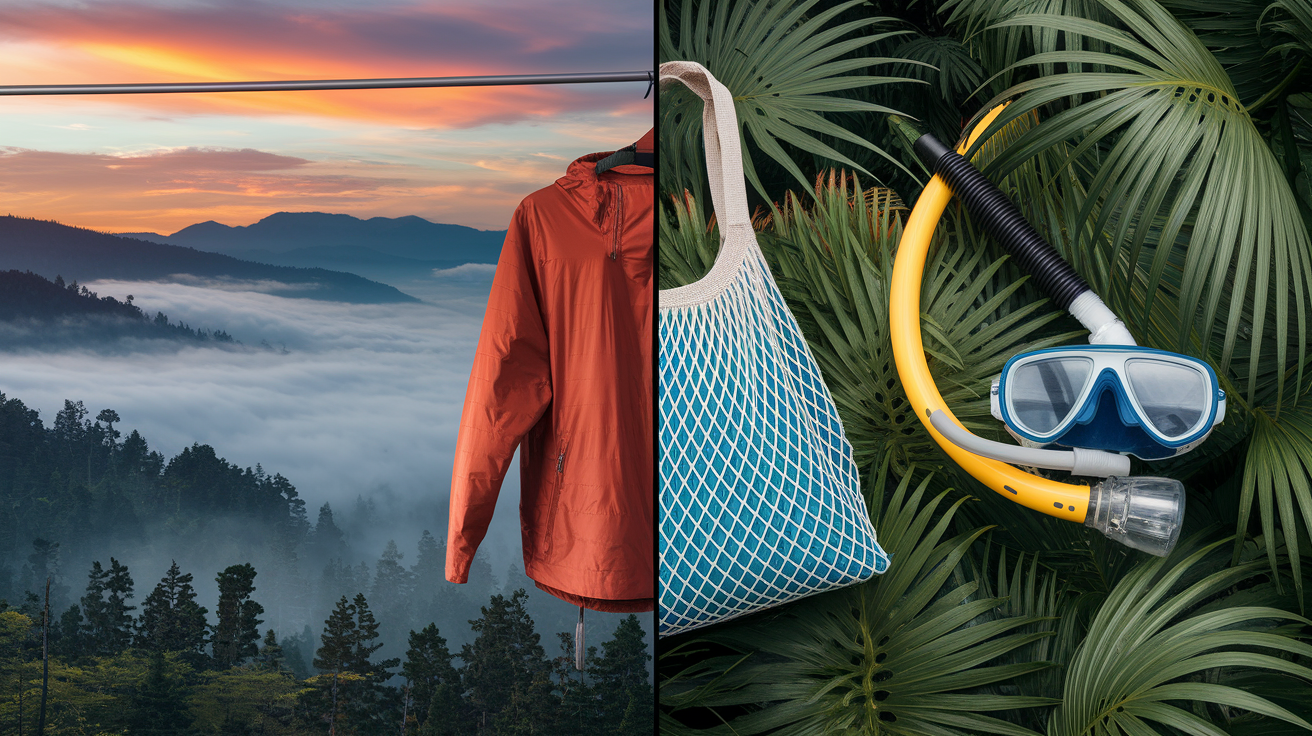
Microclimates change the packing equation. If you’re visiting high-elevation areas (cloud forests, mountain towns, volcanic peaks), nights can drop into the 60s or lower. You’ll need a warm mid-layer and long pants even during rainy season. Coastal rainforest zones stay hot and humid all day, so prioritize ventilation and quick-dry fabrics over warmth. Check elevation and regional climate notes for each stop on your itinerary before you pack.
Jungle hikes require insect-repellent clothing, long sleeves, long pants, and serious waterproofing for gear. If you’re doing multi-day treks or staying in remote lodges, bring extra dry bags and a headlamp with a red-light mode to avoid attracting bugs at night.
Families traveling with kids should add a lightweight rain poncho for each child, extra Ziplocs for snacks and tablets, and a compact portable changing pad that doubles as a clean dry surface during stops.
Snorkeling or water-activity travelers benefit from a small mesh bag to keep wet swimsuits and towels separate from the rest of their luggage and a waterproof dry bag large enough to hold a phone, keys, and camera during boat trips.
Final Words
Pack the lightweight rain jacket, quick-dry shirts, a dry bag, and one wet-ready shoe. These are the items you’ll reach for every day.
Layer breathable fabrics, protect electronics with dry sacks and ziplocks, and plan mornings outside with indoor afternoons. Don’t skip insect repellent or a small first-aid kit.
Use this rainy season packing list for tropical destinations as your baseline, tweak for activities, and you’ll stay dry, comfortable, and ready to enjoy the trip.
FAQ
Q: What is the 5 4 3 2 1 rule when packing?
A: The 5-4-3-2-1 rule when packing is a quick outfit-count: bring 5 tops, 4 bottoms, 3 pairs of underwear/socks, 2 pairs of shoes, and 1 jacket—useful for a week away without laundry.
Q: What is the 3-5-7 rule in packing?
A: The 3-5-7 rule in packing is a trip-length guideline: pack for 3 days (minimal), 5 days (moderate), or 7 days (full) depending on laundry access and how many outfit changes you need.
Q: What is the 3 3 3 rule for packing and what is the 3 3 3 rule for flights?
A: The 3-3-3 rule for packing means 3 tops, 3 bottoms, and 3 pairs of underwear/socks—a compact 3-day capsule. For flights, 3-3-3 often refers to an economy seat layout with three seats per block.